UI/UX
STUDENT PROJECT
YEAR: 2024
ROLE: UX/UI Designer · Research · Visual Design
PLATFORM: Responsive Website
TOOLS: Figma, Miro, Adobe Photoshop, After Effects
PROBLEM
{1}
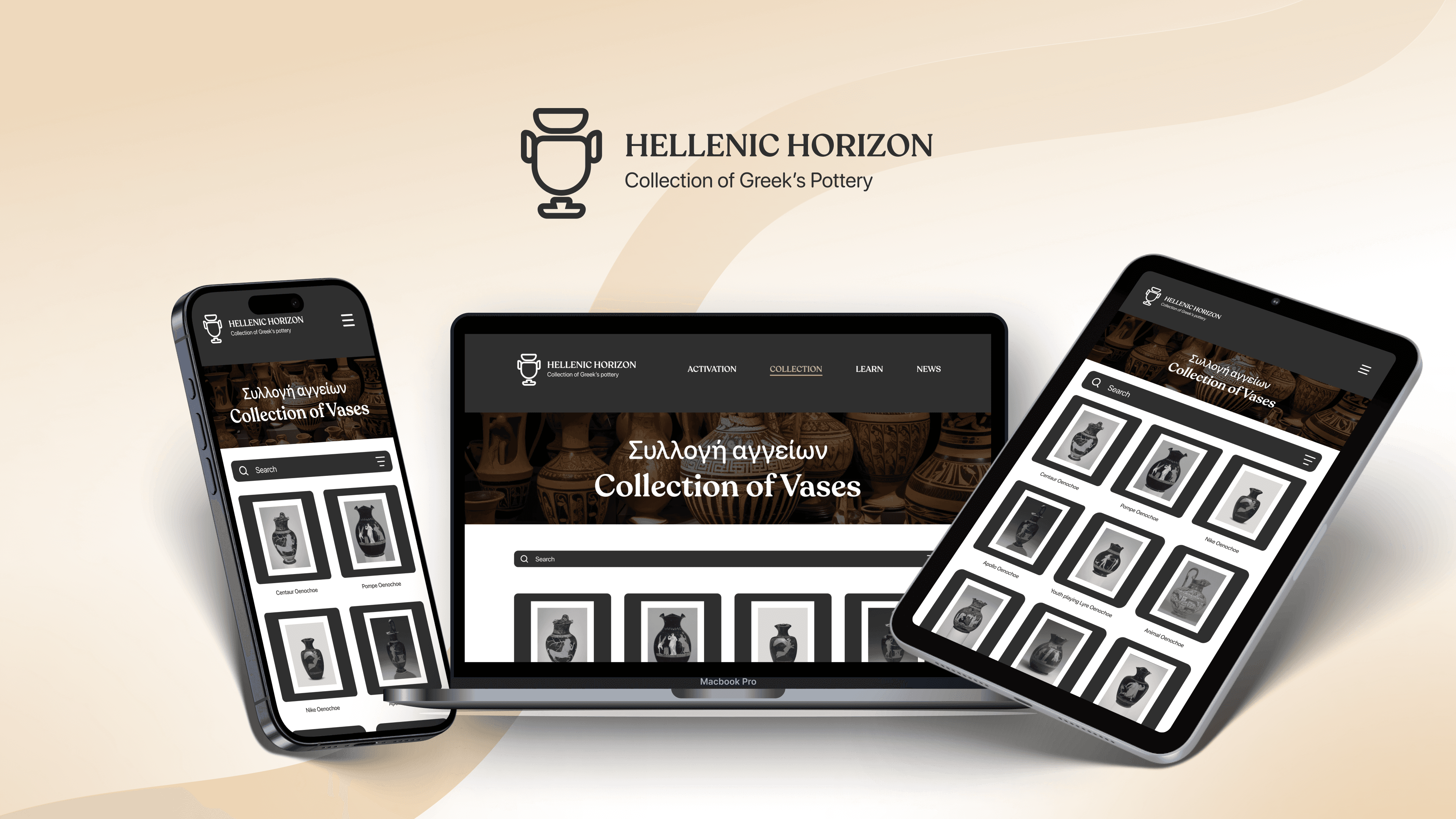
Greek pottery has survived for centuries, carrying stories of myth, everyday life, and history, yet these narratives are often presented in ways that feel distant and inaccessible to modern audiences.
This sparked the question - How can we present Greek pottery in a way that feels engaging, interactive, and meaningful for modern younger audiences?
SOLUTION
{2}
Transforming ancient artefacts into immersive narrative experiences.
Illustrated scenes on the vases are animated to emphasise movement and meaning
Motion and sound design bring attention to key narrative moments
Interactive explanations helps users understand what is happening within each scene


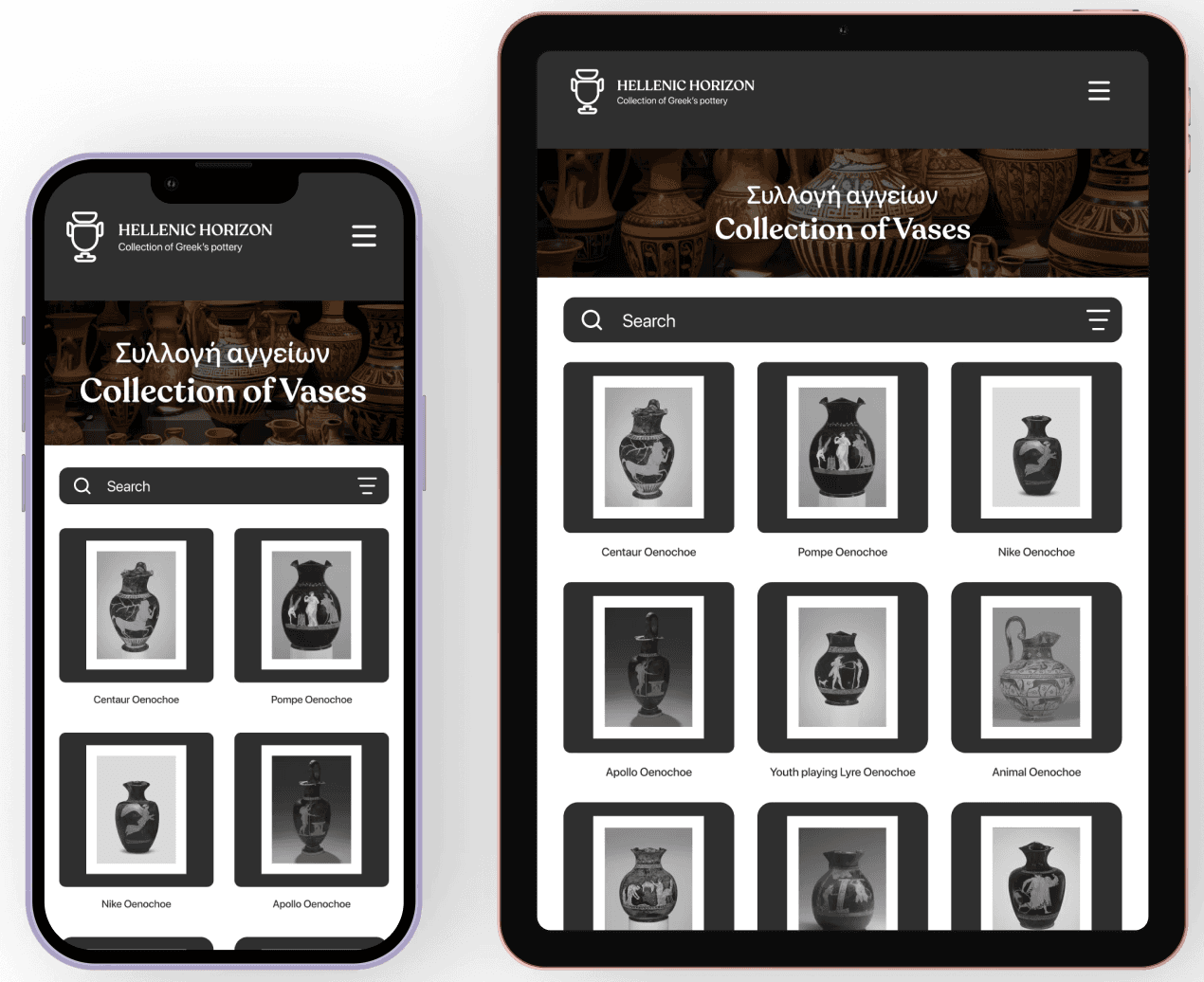
Over 60 Greek vases presented as an evolving, interactive collection
Pottery are organised through different types to avoid cognitive overload
Supports both focused exploration and open-ended discovery
Designed across desktop, tablet, and mobile for modern user experience
A learning space explaining different types of Greek vases for newcomers
LOFI PROTOTYPE
DESIGN SYSTEM
FINAL DESIGN


REFLECTION
{end}
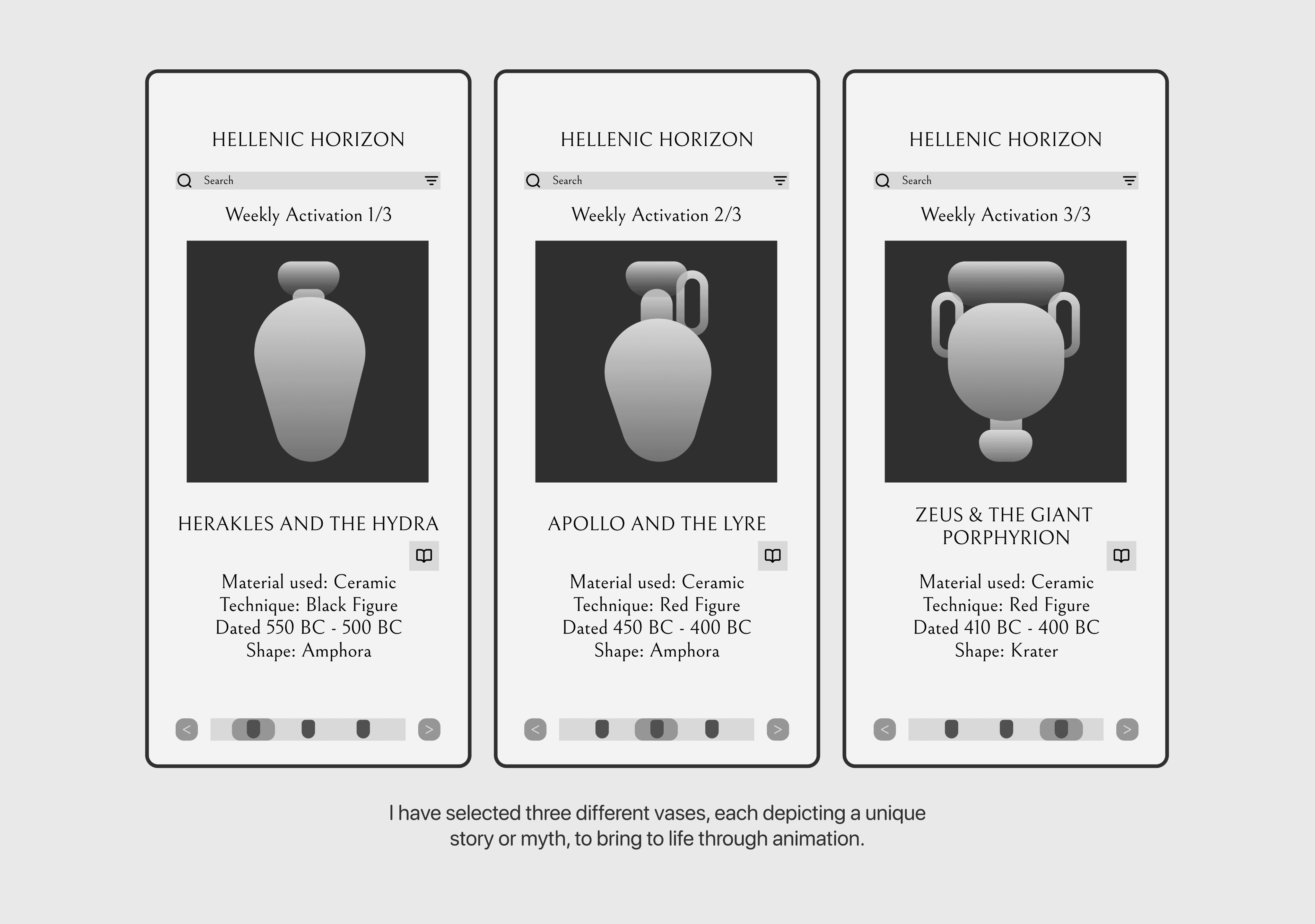
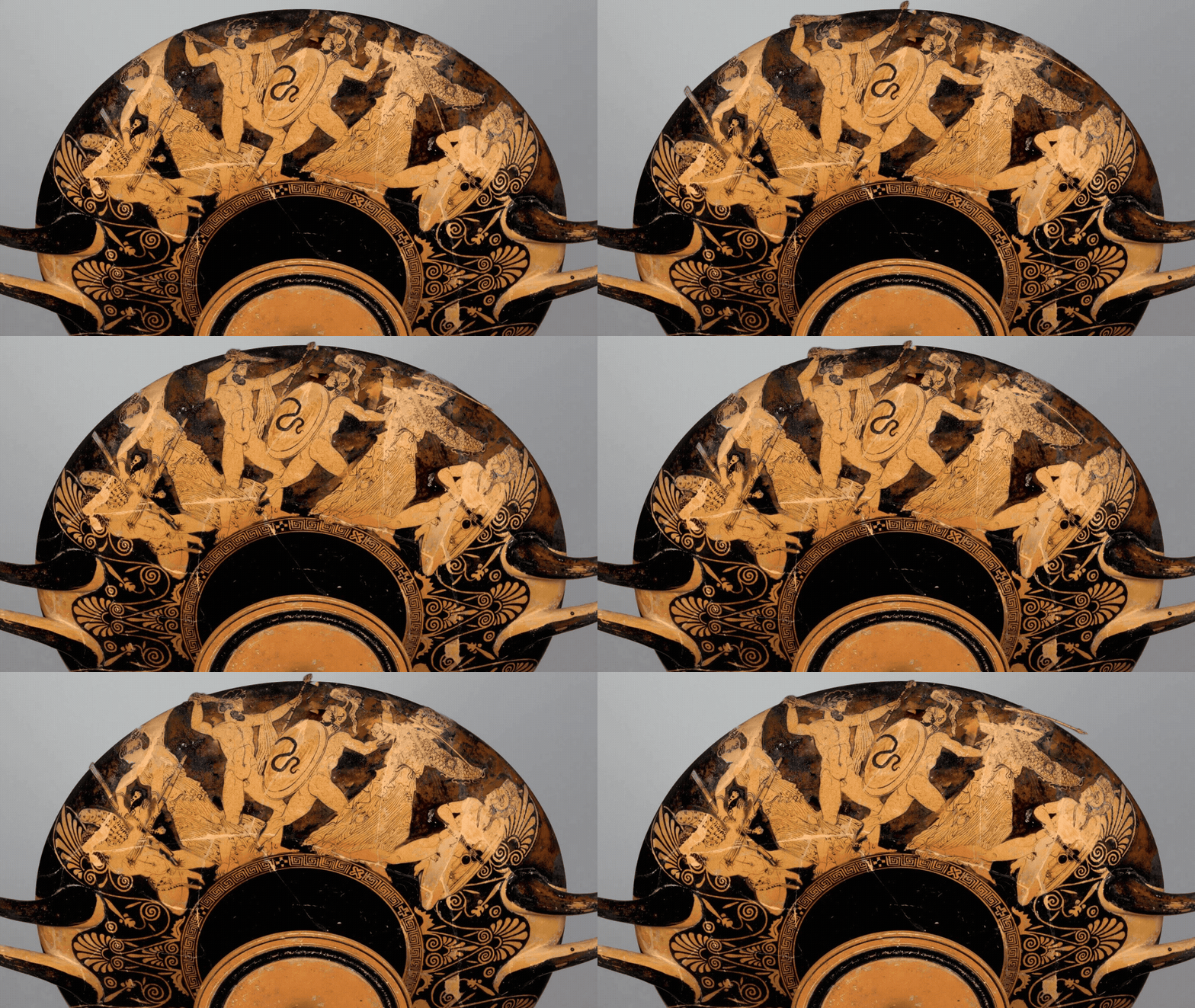
Hellenic Horizon came from noticing how easy it is to walk past Greek vases in a museum without really looking at them. I picked three vases with different myths (Apollo playing the lyre, Hercules fighting the Hydra, the Gods battling the Giants) and animated the figures in After Effects and Photoshop, separating each figure from its background then puppeteering the movement, with sound design built from combined effects clips.
The card sorting test caught something I didn’t expect: some vase photos were still monochrome, some were colour, and users sorted by photo colour instead of vase type, assuming black and white meant older. The real problem wasn’t the vases, it was my documentation. I reshot the whole 60+ piece collection so every photo matched.
The filter system didn’t fully work out. Figma doesn’t let you apply two Variables to the same layer, so only the “Technique” filter actually works in the Hi-Fi prototype, the rest are just visual. Next time I’d move that logic into code so people could filter by shape, era, and technique all at once.