UI/UX
STUDENT PROJECT
YEAR: 2024
ROLE: UX/UI Designer · Research · Visual Design
PLATFORM: Responsive Website
TOOLS: Figma, Miro, Adobe Photoshop
PROBLEM
{1}
Many students feel unsure about their identity and sense of belonging during university. While personality tests are popular, most feel generic and emotionally detached. Students instead seek light-hearted, low-pressure digital experiences that encourage reflection without adding stress.
This sparked the question - How might we use the story of Sun Wukong in an interactive way to help students aged 18–35 explore their identity in a stress-relieving experience?
SOLUTION
{2}
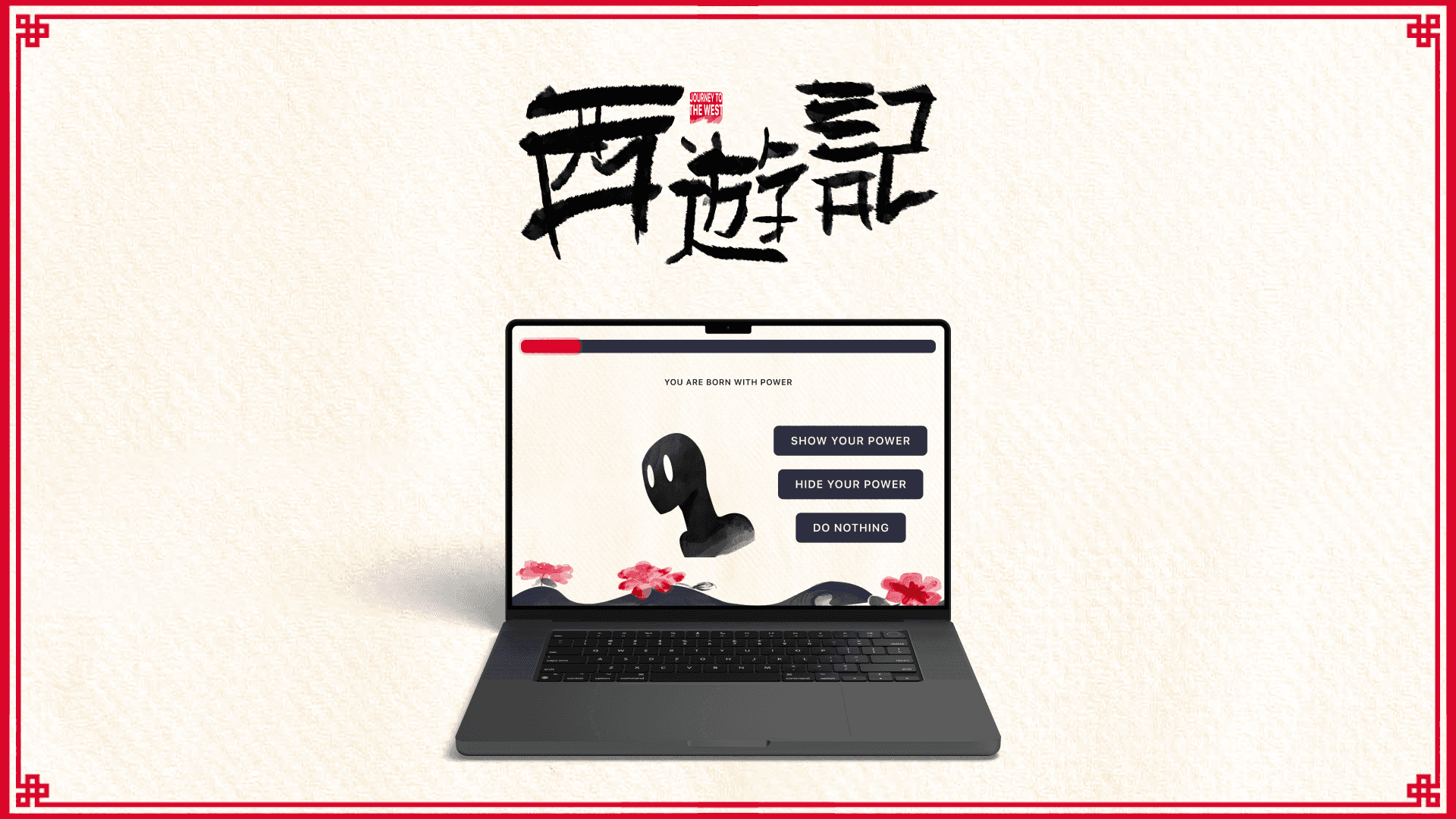
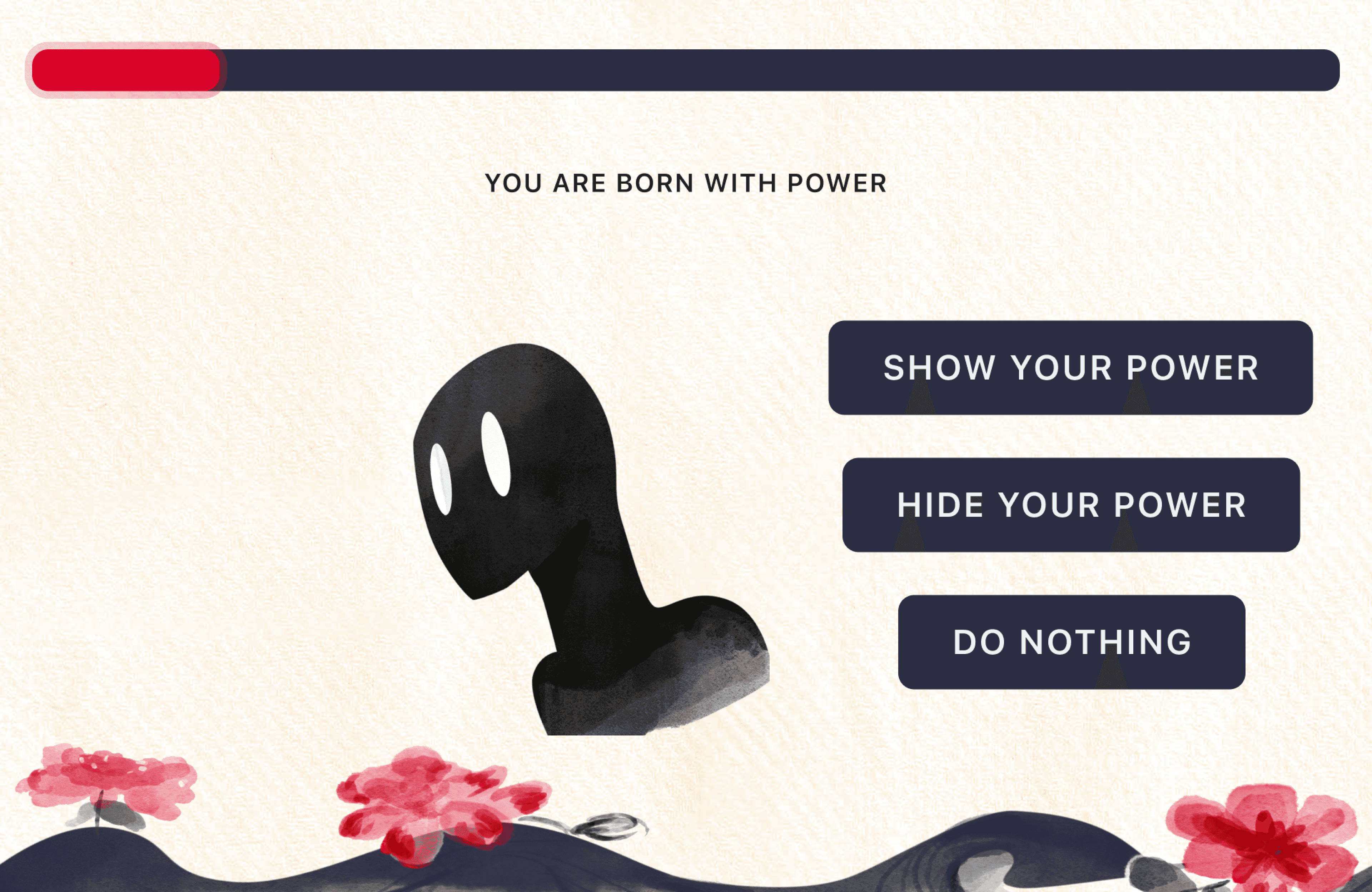
Narrative-driven test inspired by the trickster character Sun Wukong from Journey to the West
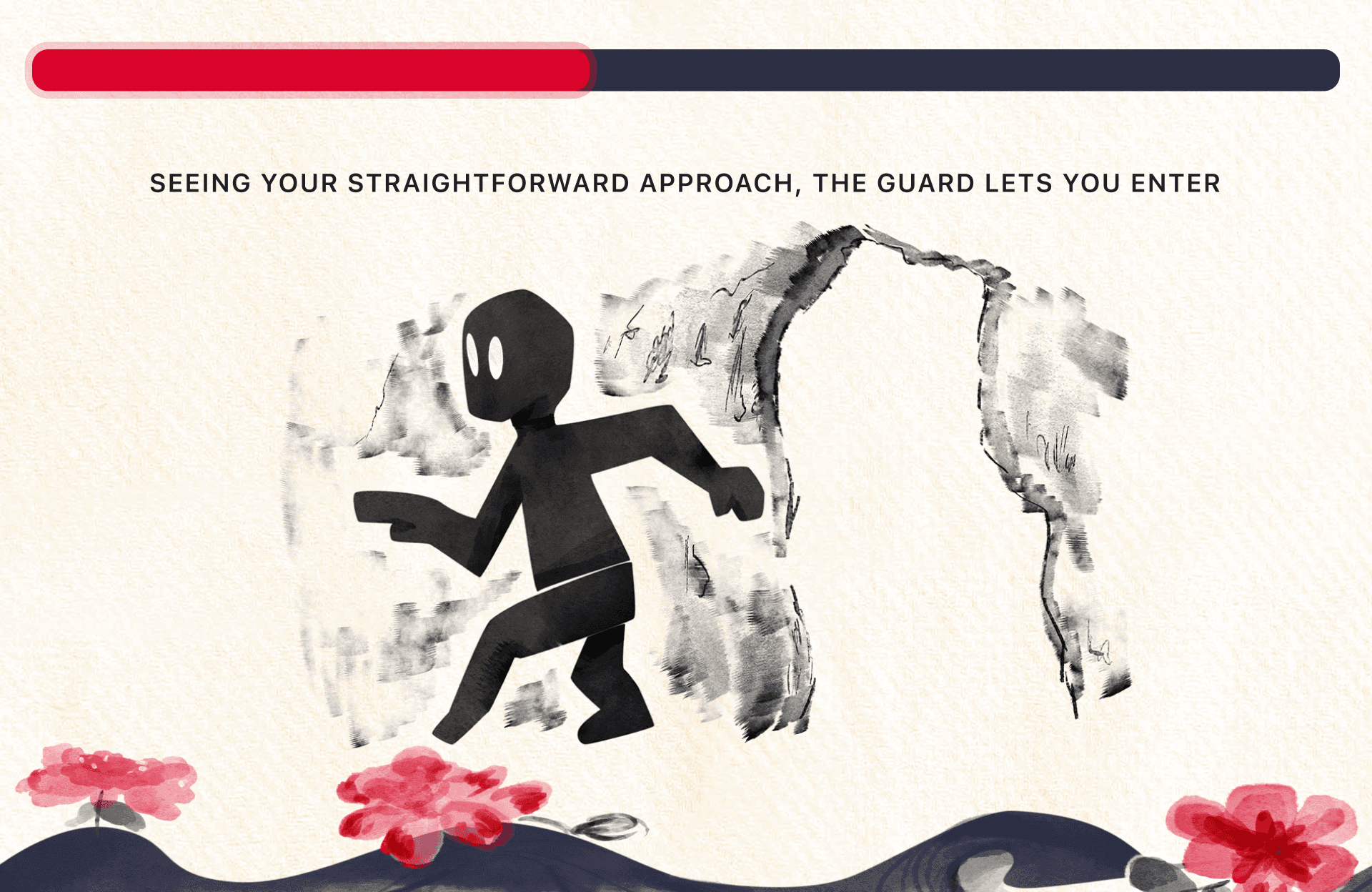
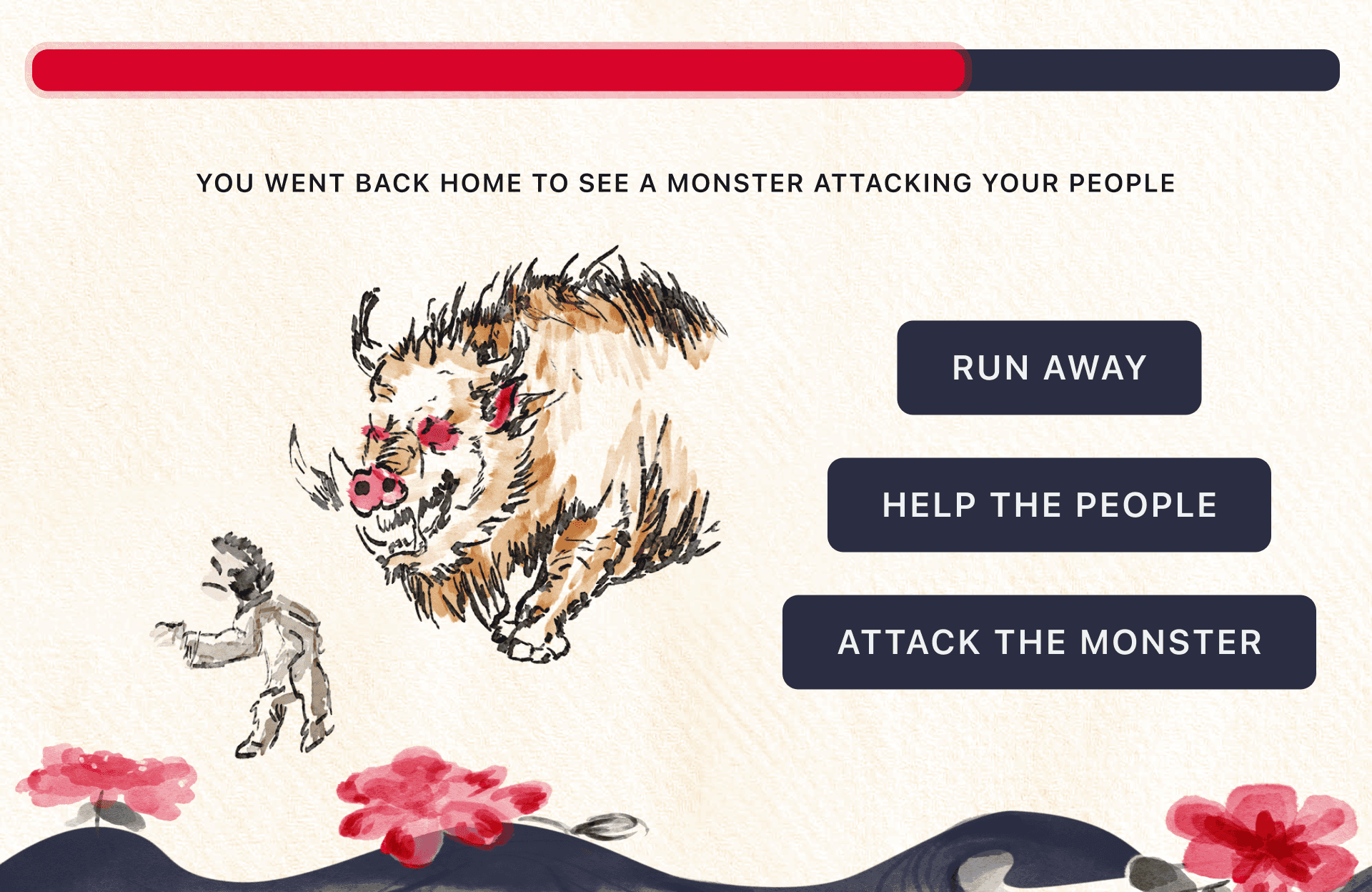
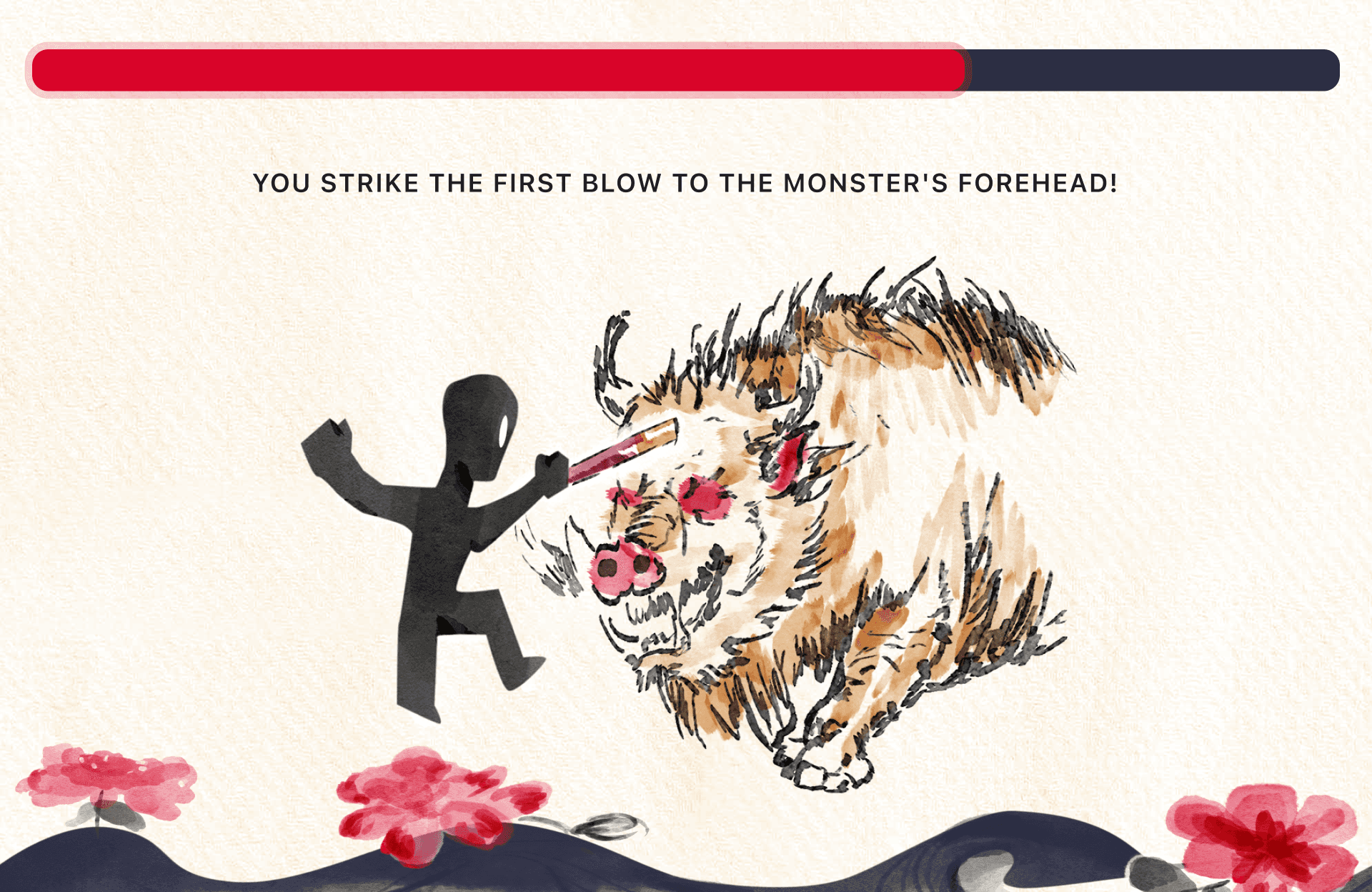
Inspired by traditional Chinese ink painting to reflect the Journey to the West theme
Expressive, minimal visuals that support storytelling without overwhelming users
Calm visual tone designed to reduce stress and encourage immersion


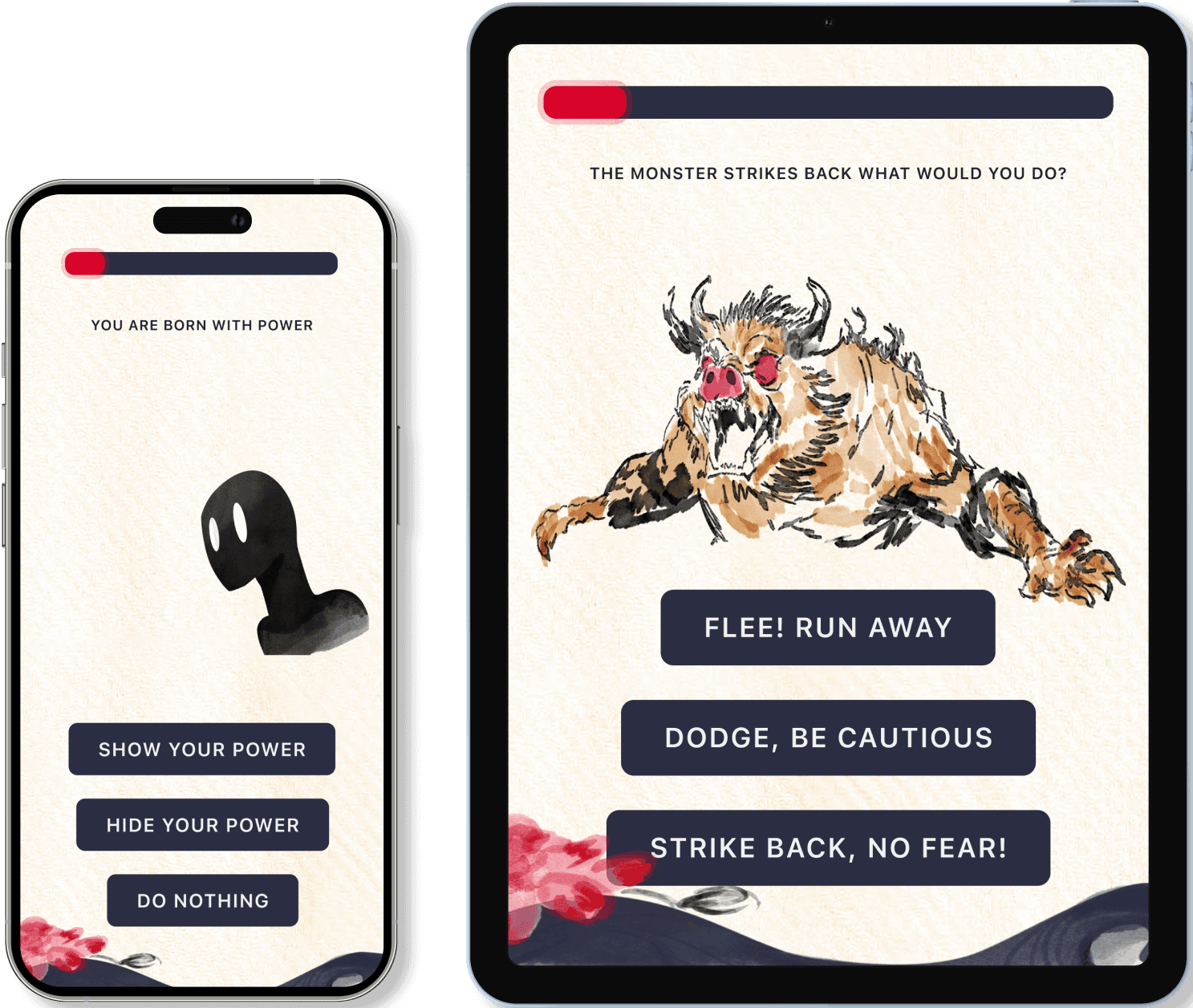
Progression through Sun Wukong’s journey creates a sense of play and discovery
Different possible outcome base on the user’s actions
Hidden secrets and “easter eggs” for the user to find
Optimised for desktop, tablet, and mobile use
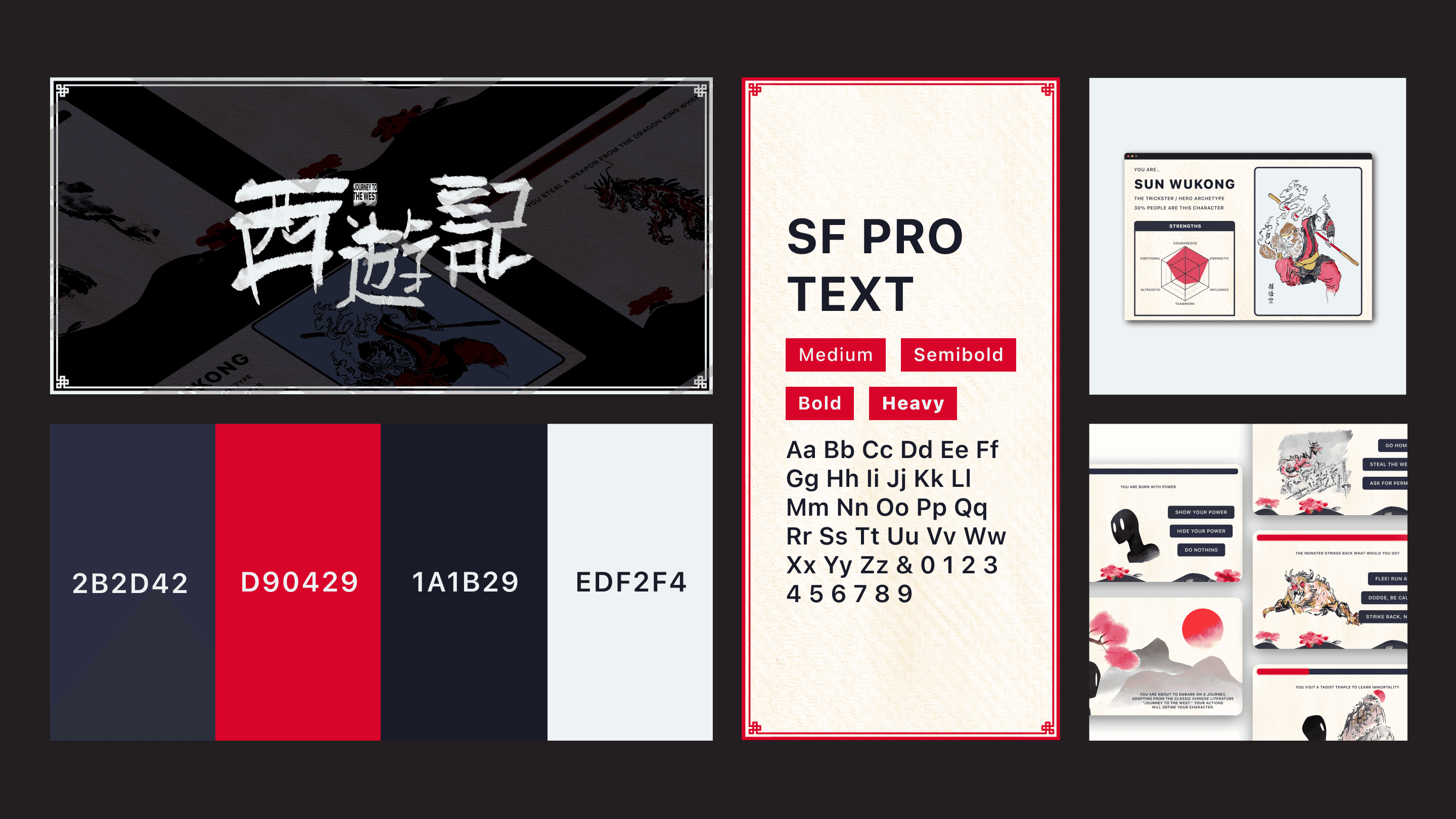
Clear hierarchy and readable typography for ease of navigation

DESIGN SYSTEM
FINAL DESIGN
REFLECTION
{end}
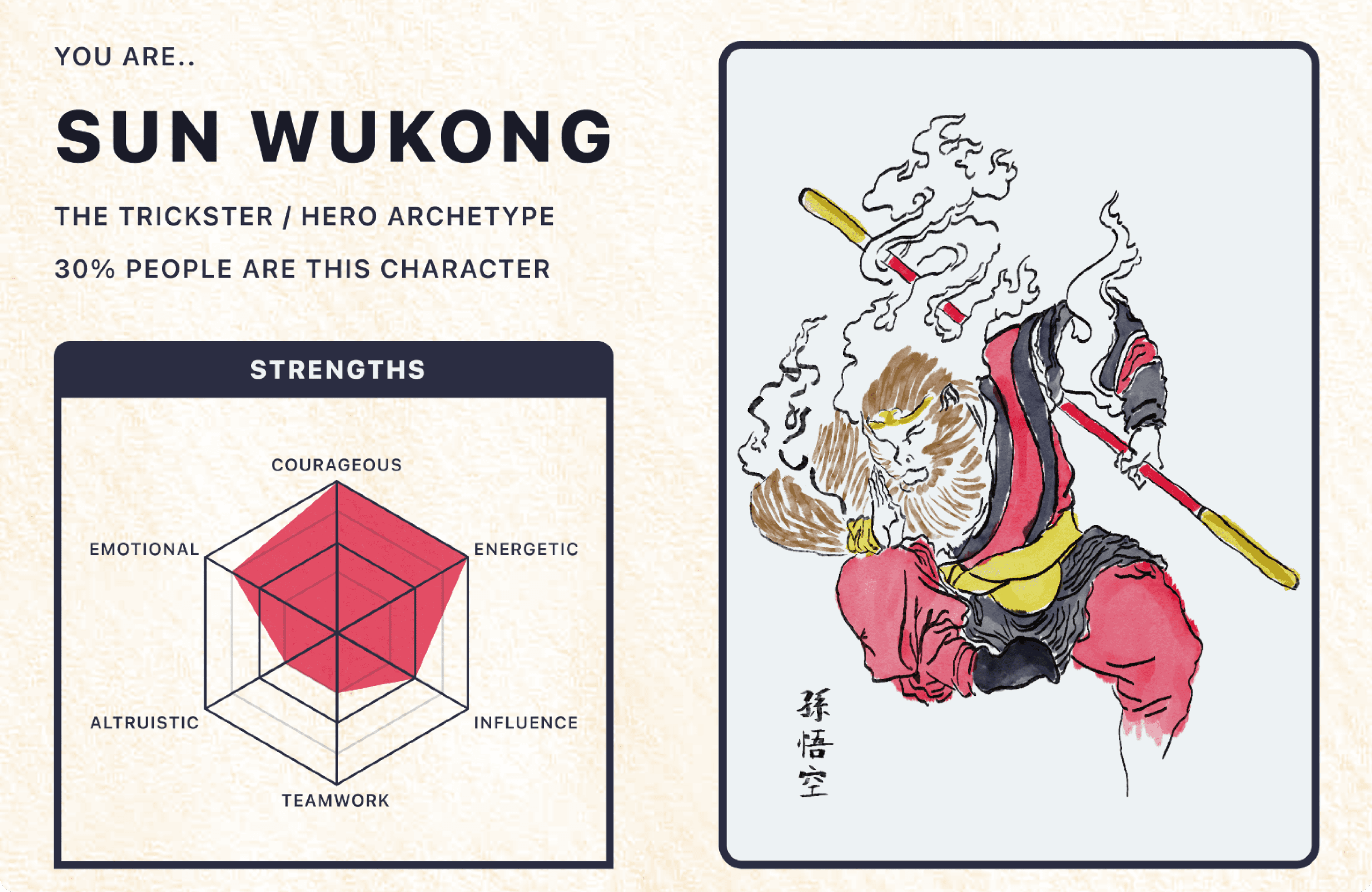
Sun Wukong’s story started as something personal, my dad telling me these tales growing up since I’m half-Chinese. I built the project around identity, since Wukong’s arc from trickster to hero maps onto what a lot of AUT students go through in their early twenties. The centrepiece was a personality test tied to the four companions on the journey, built in Figma with Variables and Conditionals so each choice actually branches to a different result.
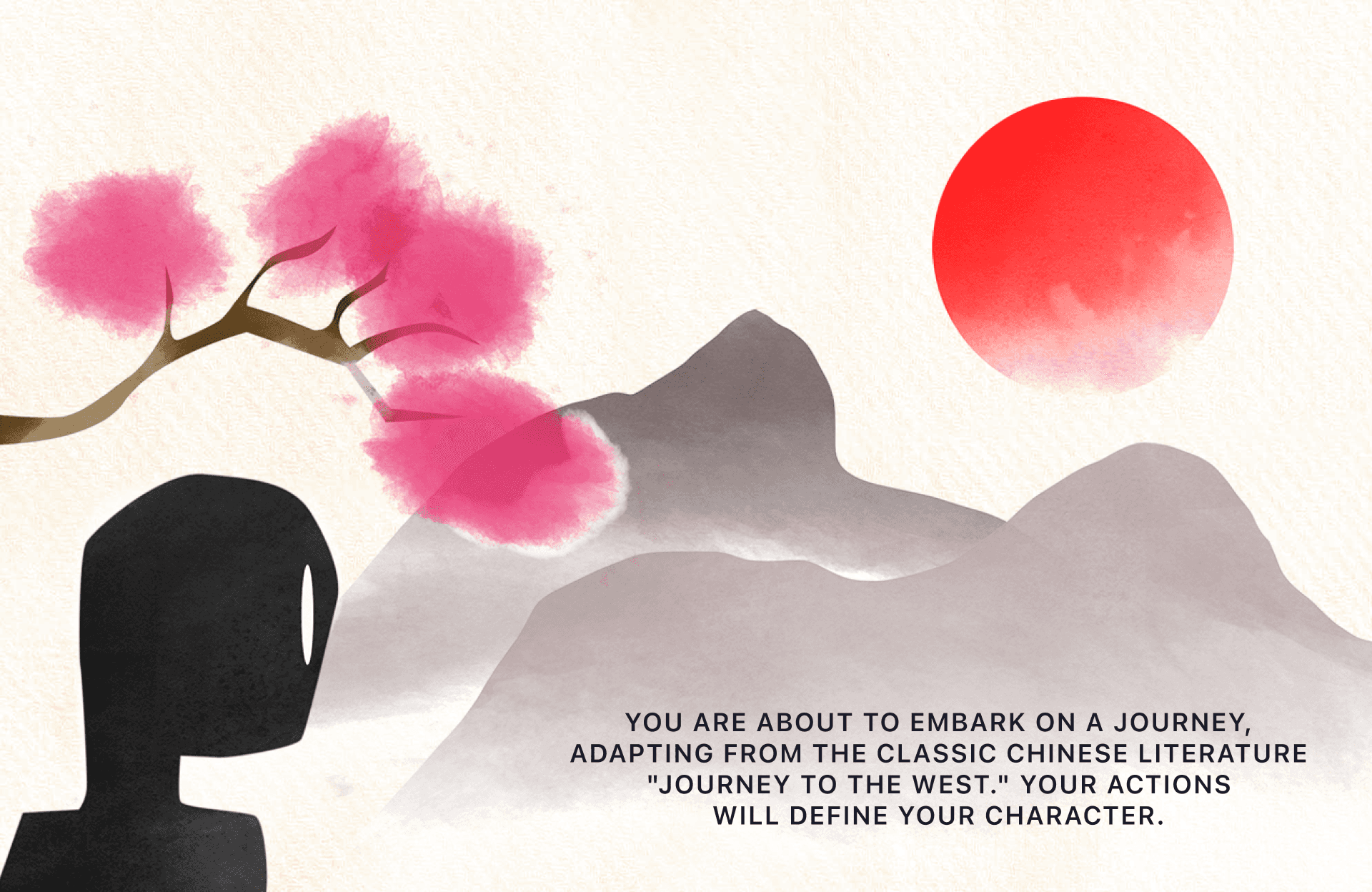
I’m not a trained watercolour artist, so I used Fotor’s AI generator to produce Chinese ink painting references, traced the outline, then painted over them by hand in Photoshop. The AI gave me a starting shape, but the brushwork and colour were mine, AI as a sketch tool, not the thing doing the painting.
Twelve weeks wasn’t much time for something this culturally loaded, and I spent over 20 hours just learning Figma’s Variables well enough to make the test work, time I’d rather have spent checking whether the results actually felt accurate to users.