/

/

MAAKINDII

MAAKINDII

MAAKINDII THAI STREET FOOD

MAAKINDII THAI STREET FOOD

MAAKINDII THAI STREET FOOD

BRANDING AND IDENTITY

BRANDING AND IDENTITY

FREELANCE

FREELANCE

YEAR: 2025

YEAR: 2025

ROLE: Visual Designer · Graphic Design

ROLE: Visual Designer · Graphic Design

DELIVERABLES: Logo Design · Menu Design

DELIVERABLES: Logo Design · Menu Design

TOOLS: Adobe Photoshop, Illustrator, Lightroom, GenAI

TOOLS: Adobe Photoshop, Illustrator, Lightroom, GenAI

CONTEXT

CONTEXT

{1}

{1}

Maakindii Takeaway is a Thai BBQ restaurant located in Auckland CBD

Maakindii Takeaway is a Thai BBQ restaurant located in Auckland CBD

The name “Maakindii” comes from the Thai phrase “มากินดิ”, which translates to “Come and eat!” in English. It’s a playful and inviting expression, often used casually among friends. The name adds a fun, cheeky tone that resonates well with the restaurant’s target audience - Thai teenagers and young adults living in Auckland.

The name “Maakindii” comes from the Thai phrase “มากินดิ”, which translates to “Come and eat!” in English. It’s a playful and inviting expression, often used casually among friends. The name adds a fun, cheeky tone that resonates well with the restaurant’s target audience - Thai teenagers and young adults living in Auckland.

LOGO ITERATES

LOGO ITERATES

{2}

{2}

Pitch 5 logos concept to the client

Pitch 5 logos concept to the client

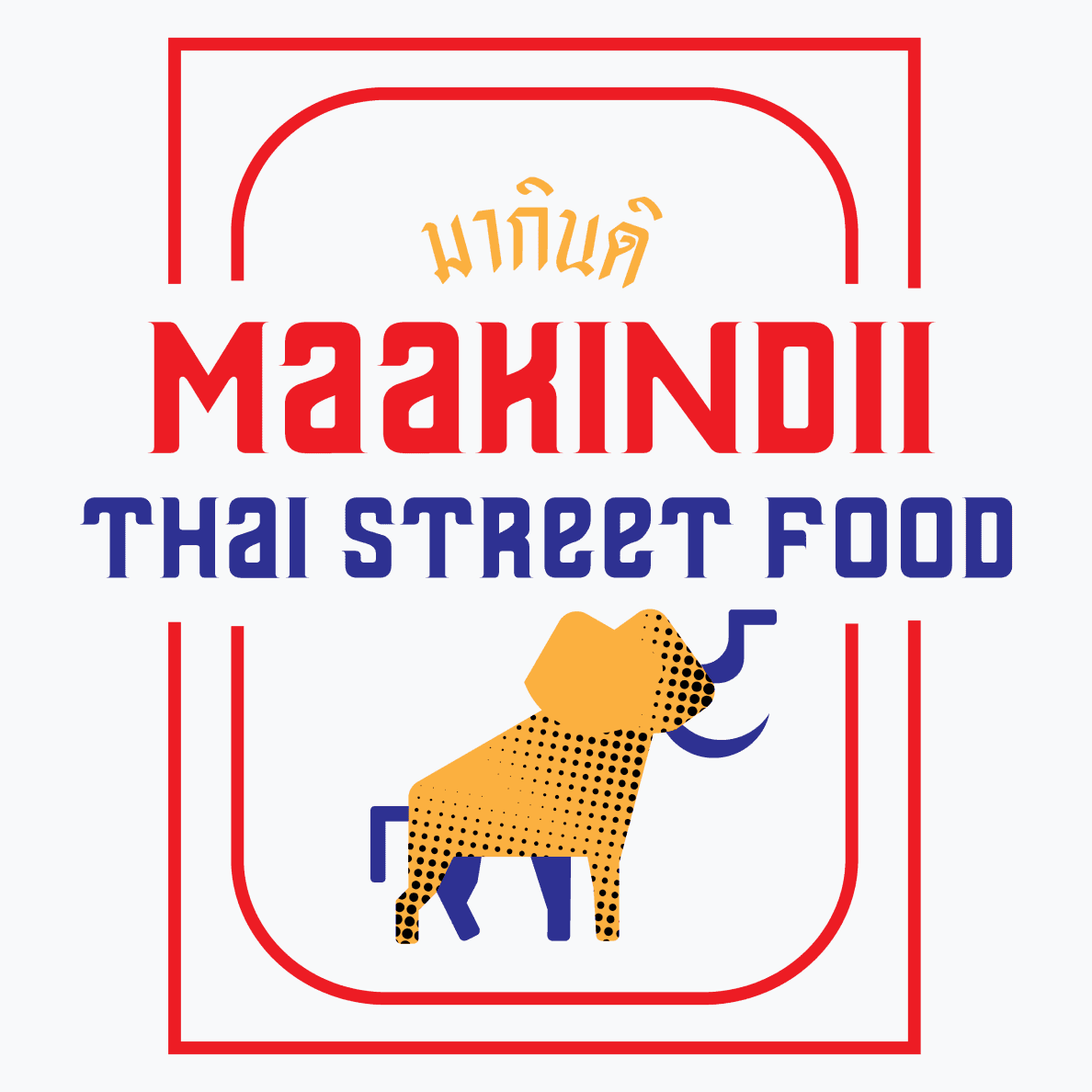
Design Logo 1:

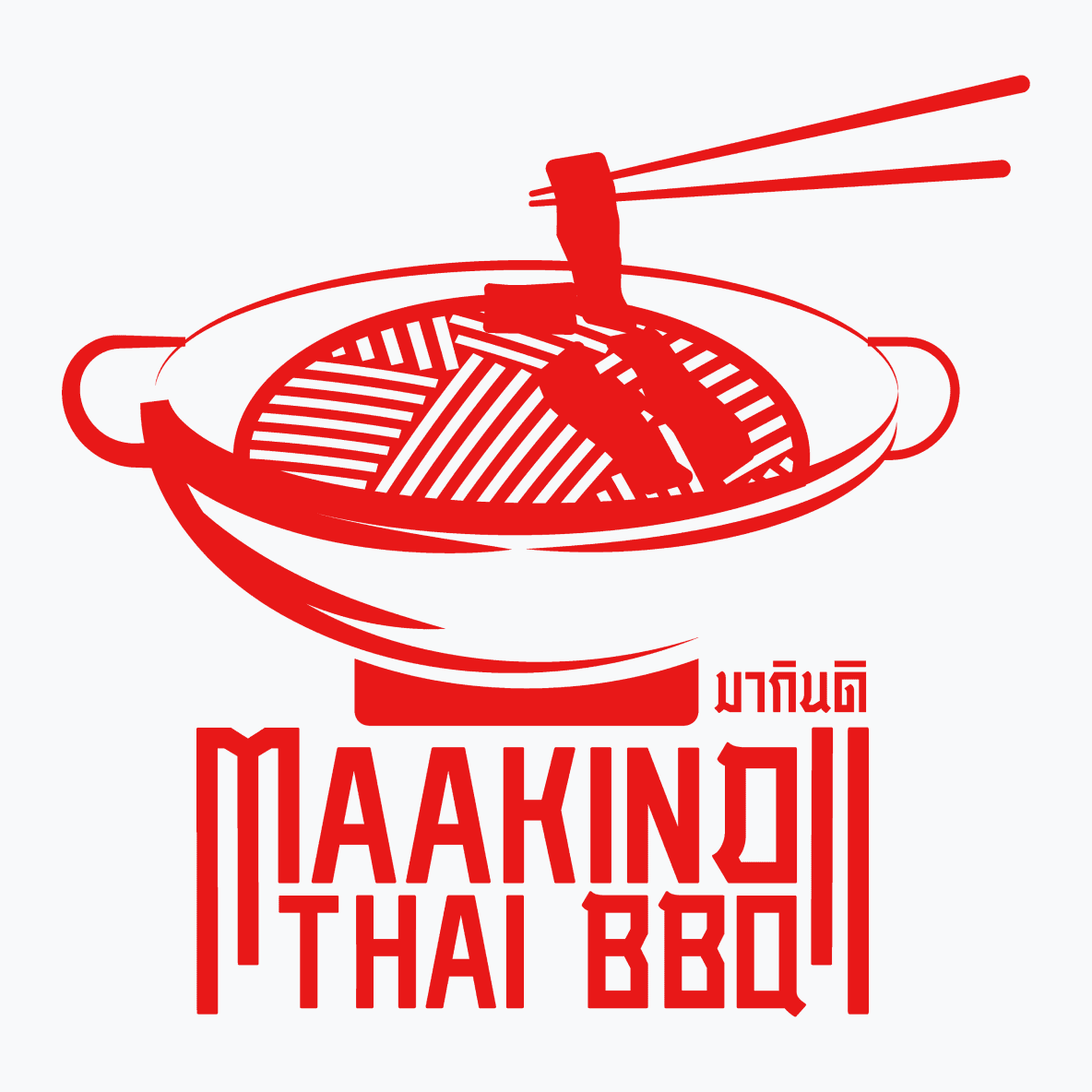
The idea of “Mookratra” -Thai BBQ- as the main focus on the logo
Design Logo 1:

The idea of “Mookratra” -Thai BBQ- as the main focus on the logo

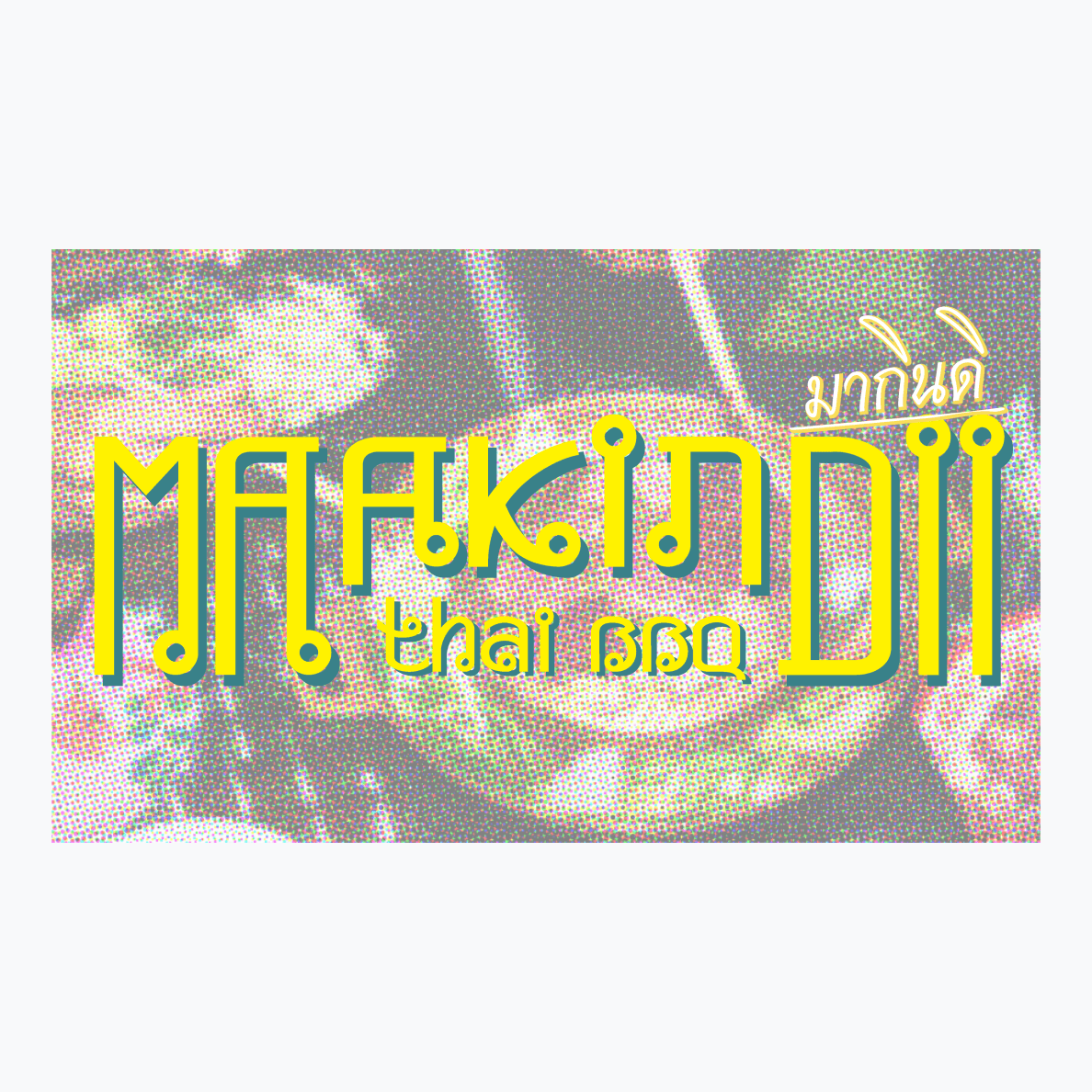
Design Logo 2:

A elephant as part of the illustration, with a frame looking vintage
Design Logo 2:

A elephant as part of the illustration, with a frame looking vintage

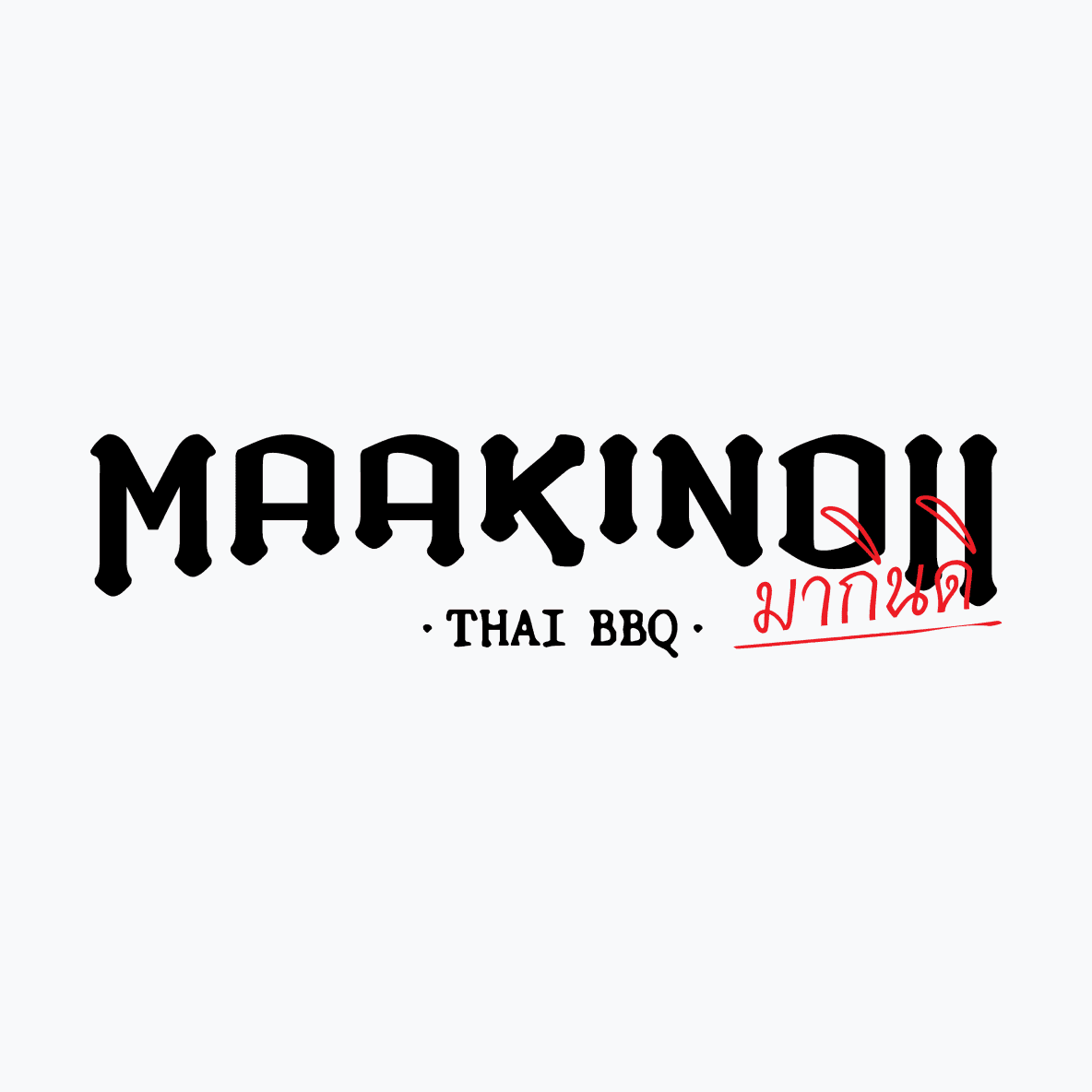
Design Logo 3:

Type similar to Thai type character with a circular head on each character
Design Logo 3:

Type similar to Thai type character with a circular head on each character

Design Logo 4:

Inspired from Thongsmith - a famous noodle brand in Thailand, with a traditional thai font on the side
Design Logo 4:

Inspired from Thongsmith - a famous noodle brand in Thailand, with a traditional thai font on the side

Design Logo 5:

The “dii” representing a Grilled Chicken

Design Logo 5:

The “dii” representing a Grilled Chicken

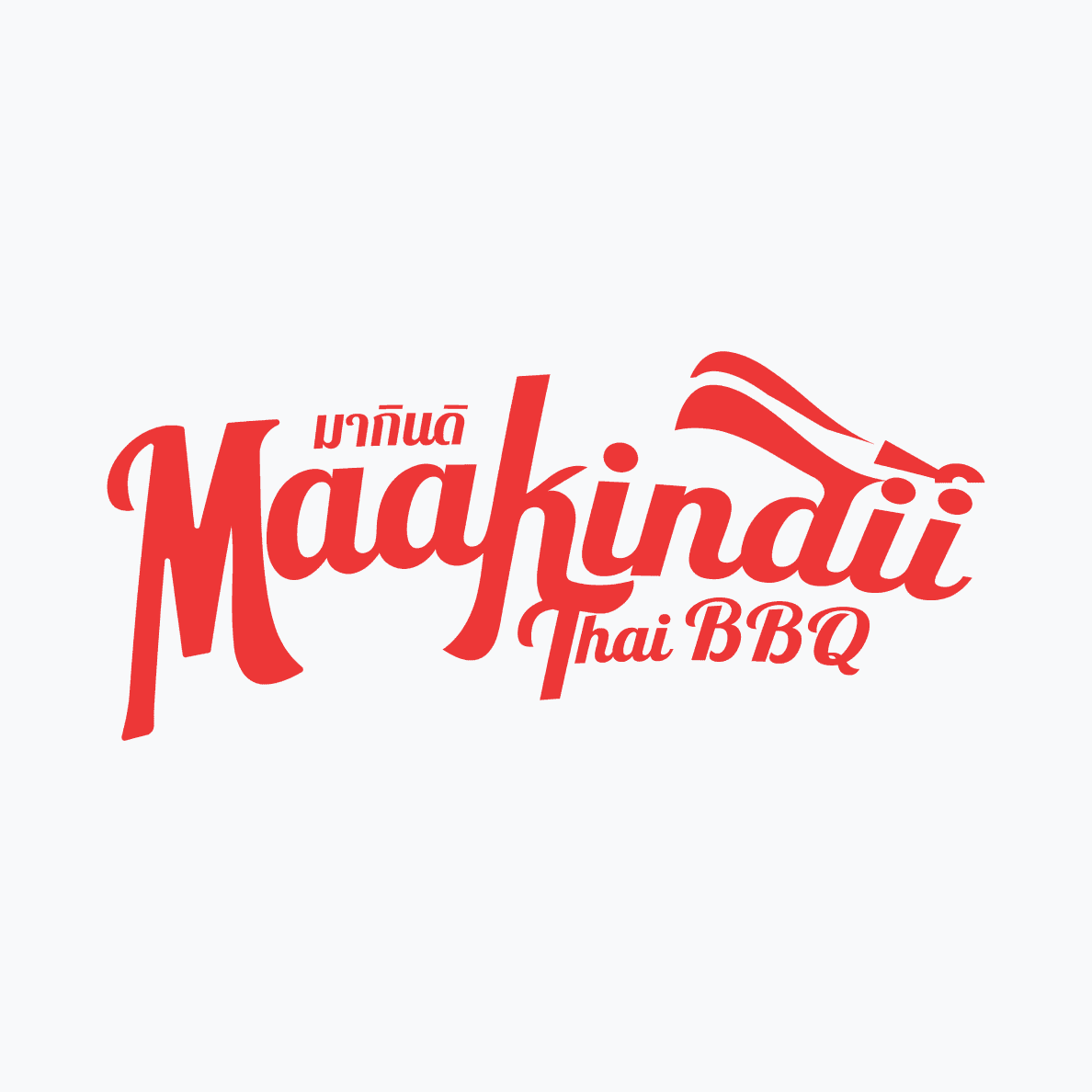
FINAL LOGO

FINAL LOGO

{3}

{3}

Inspirations

Inspirations

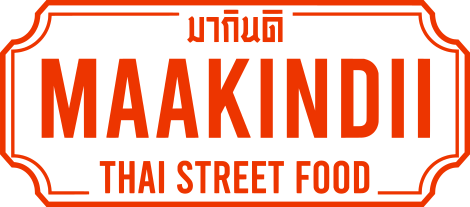
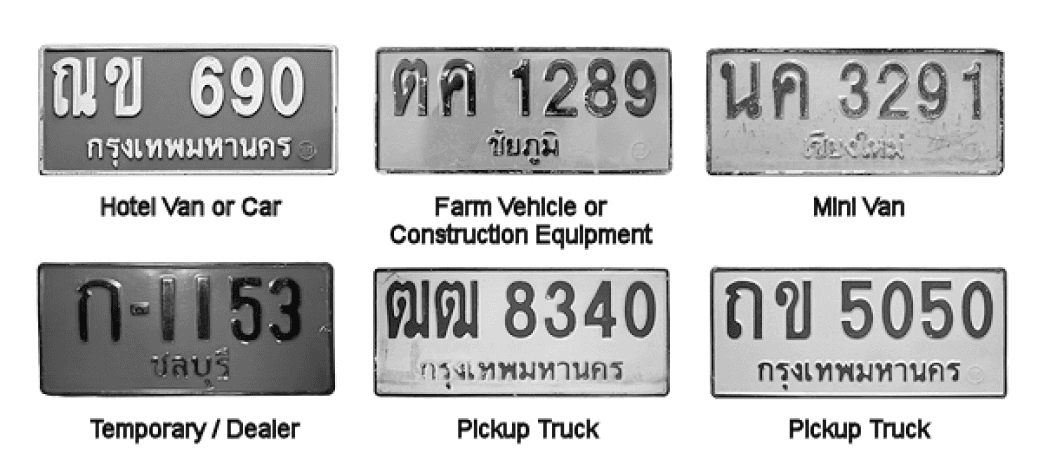
The final logo draws inspiration from Thai vehicle number plates, subtly referencing the lively presence of tuk-tuks in Thai street culture.

The final logo draws inspiration from Thai vehicle number plates, subtly referencing the lively presence of tuk-tuks in Thai street culture.

MENU DESIGN

MENU DESIGN

{4}

{4}

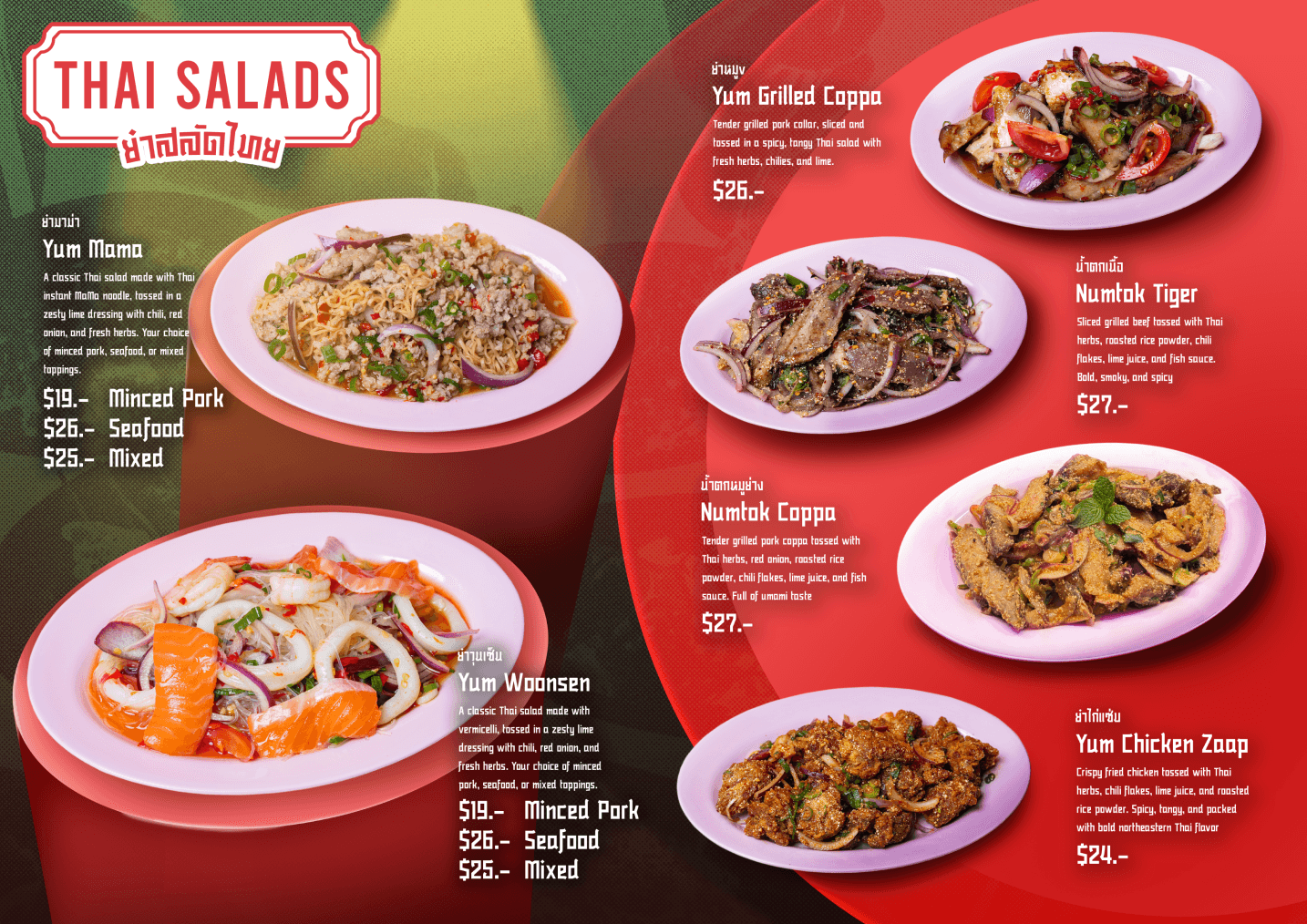
The initial “failed” menu design

The initial “failed” menu design

The first menu concept was designed as a double-page A4 layout, using food images provided by Maakindii to replicate a traditional Thai restaurant menu. The layout was handcrafted in Adobe Photoshop with royalty-free assets, but the result lacked strong visual impact and brand alignment + overwhelming amount of text

The first menu concept was designed as a double-page A4 layout, using food images provided by Maakindii to replicate a traditional Thai restaurant menu. The layout was handcrafted in Adobe Photoshop with royalty-free assets, but the result lacked strong visual impact and brand alignment + overwhelming amount of text

FINAL MENU

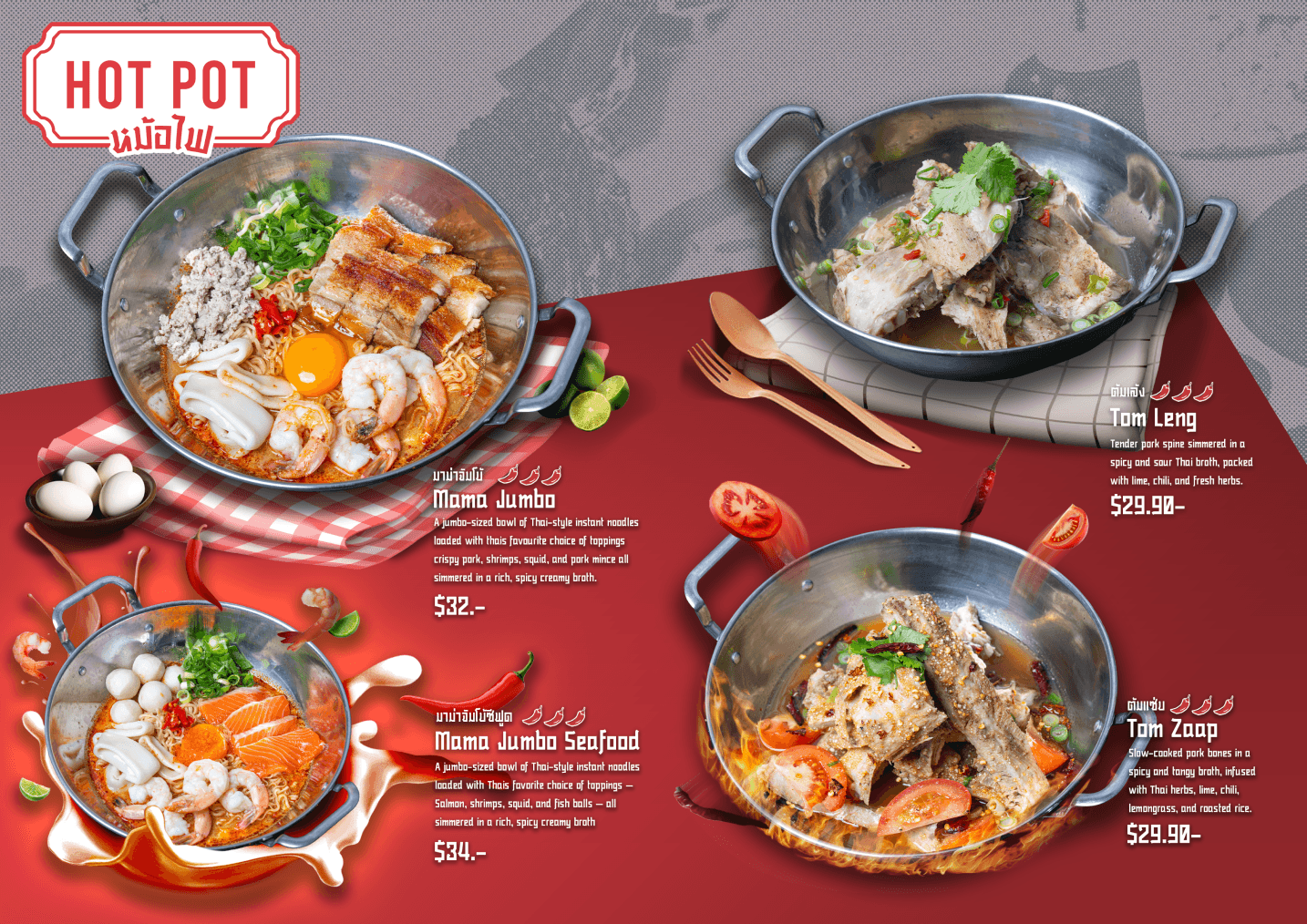
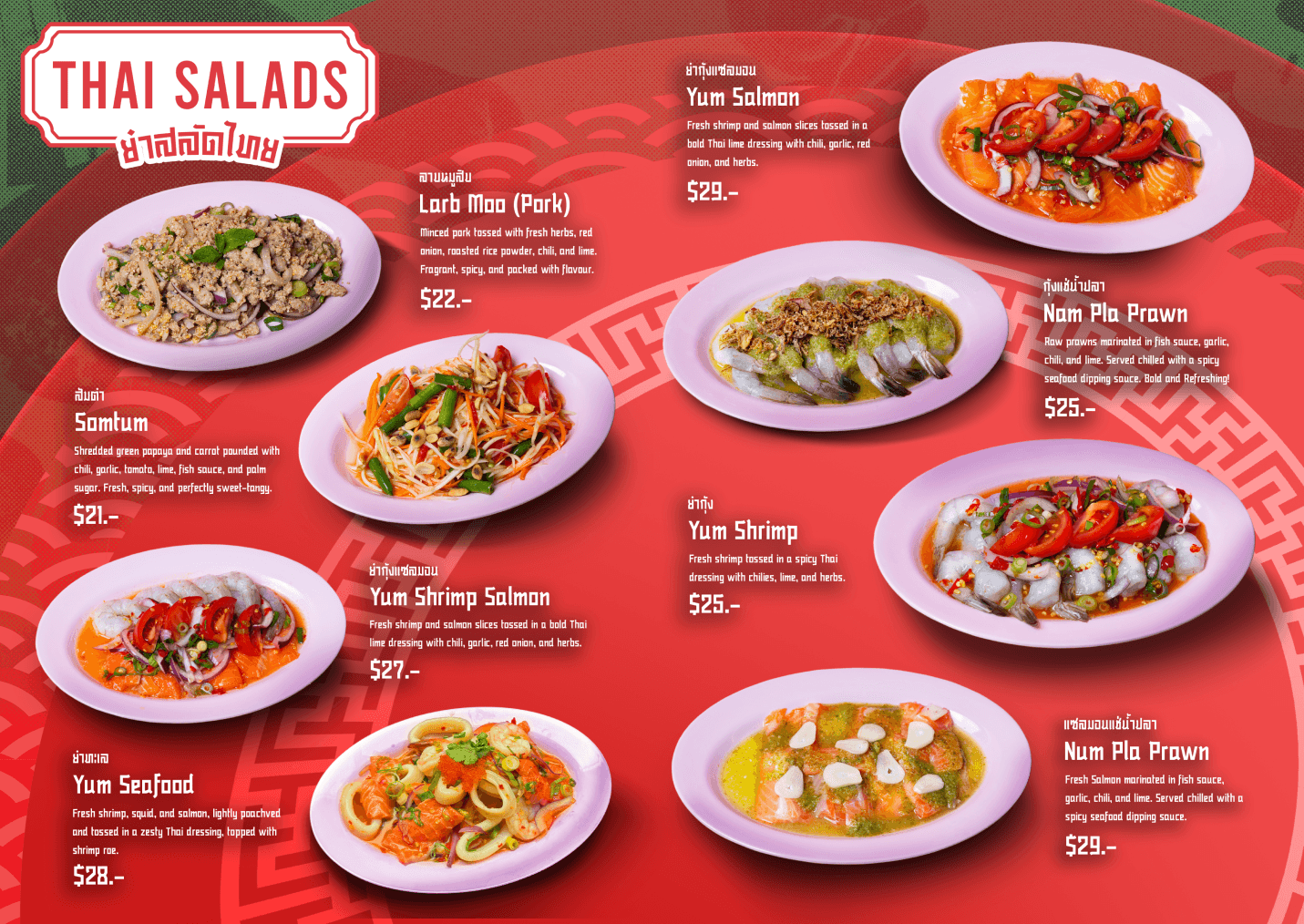
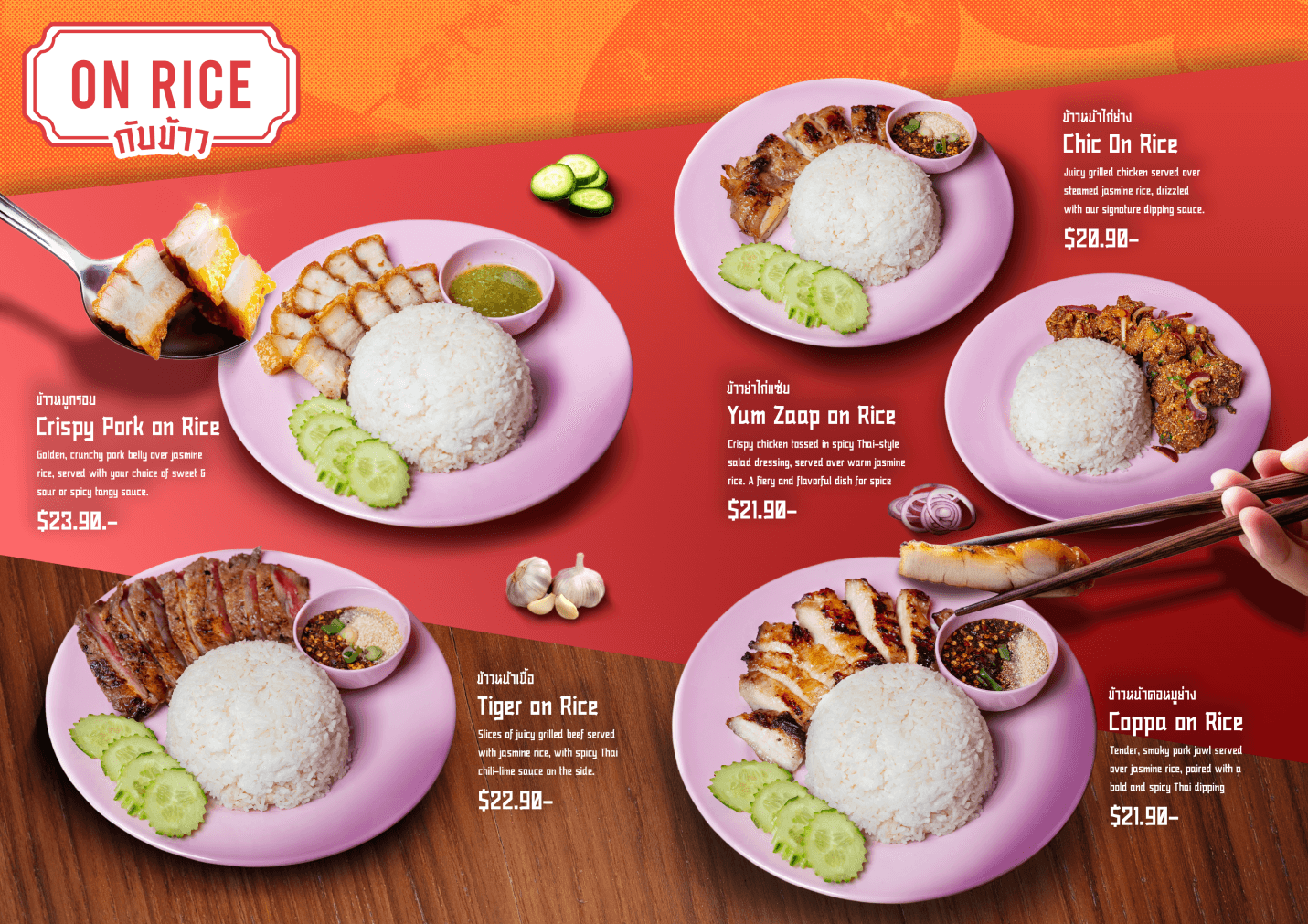
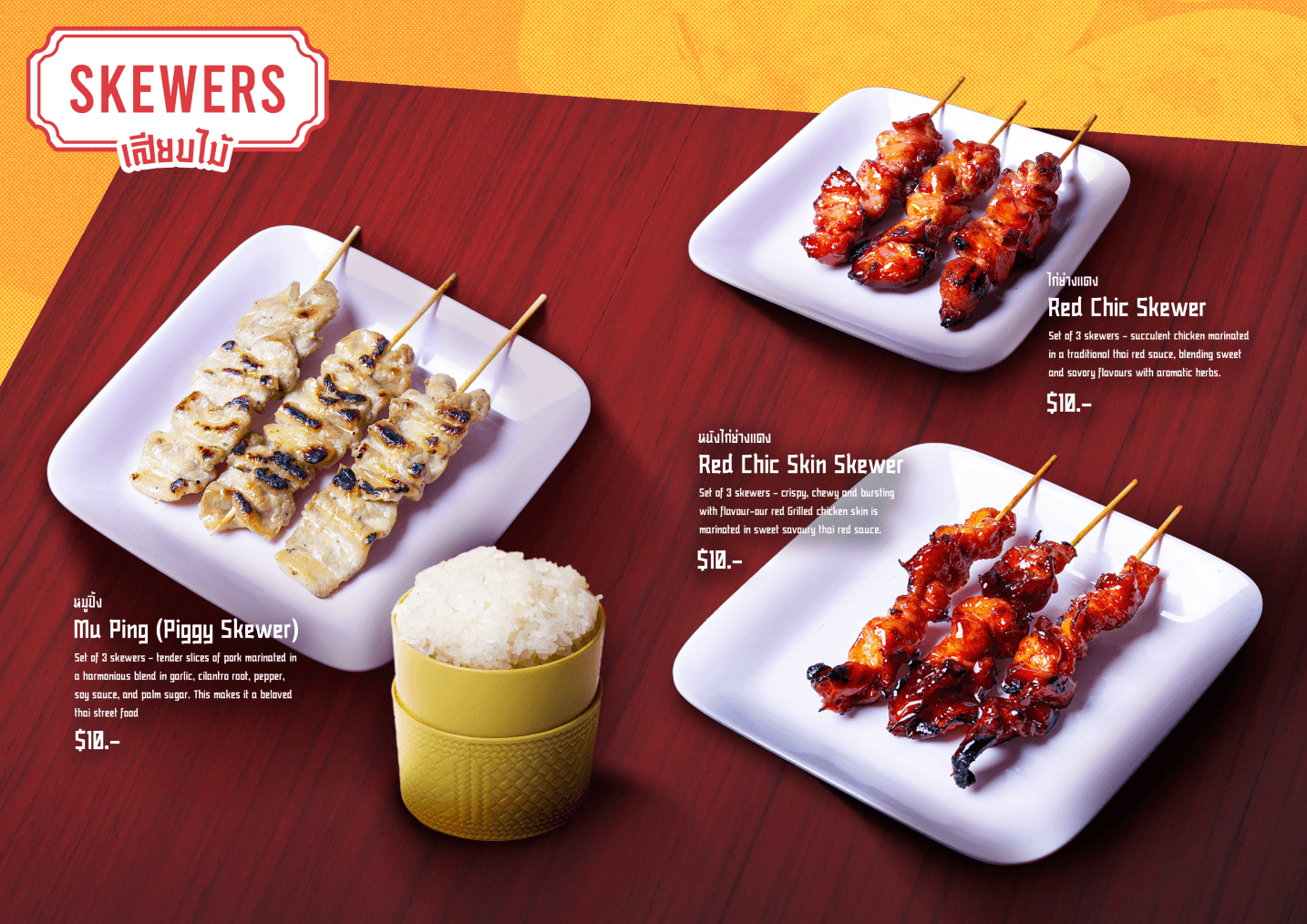
{5}

{5}

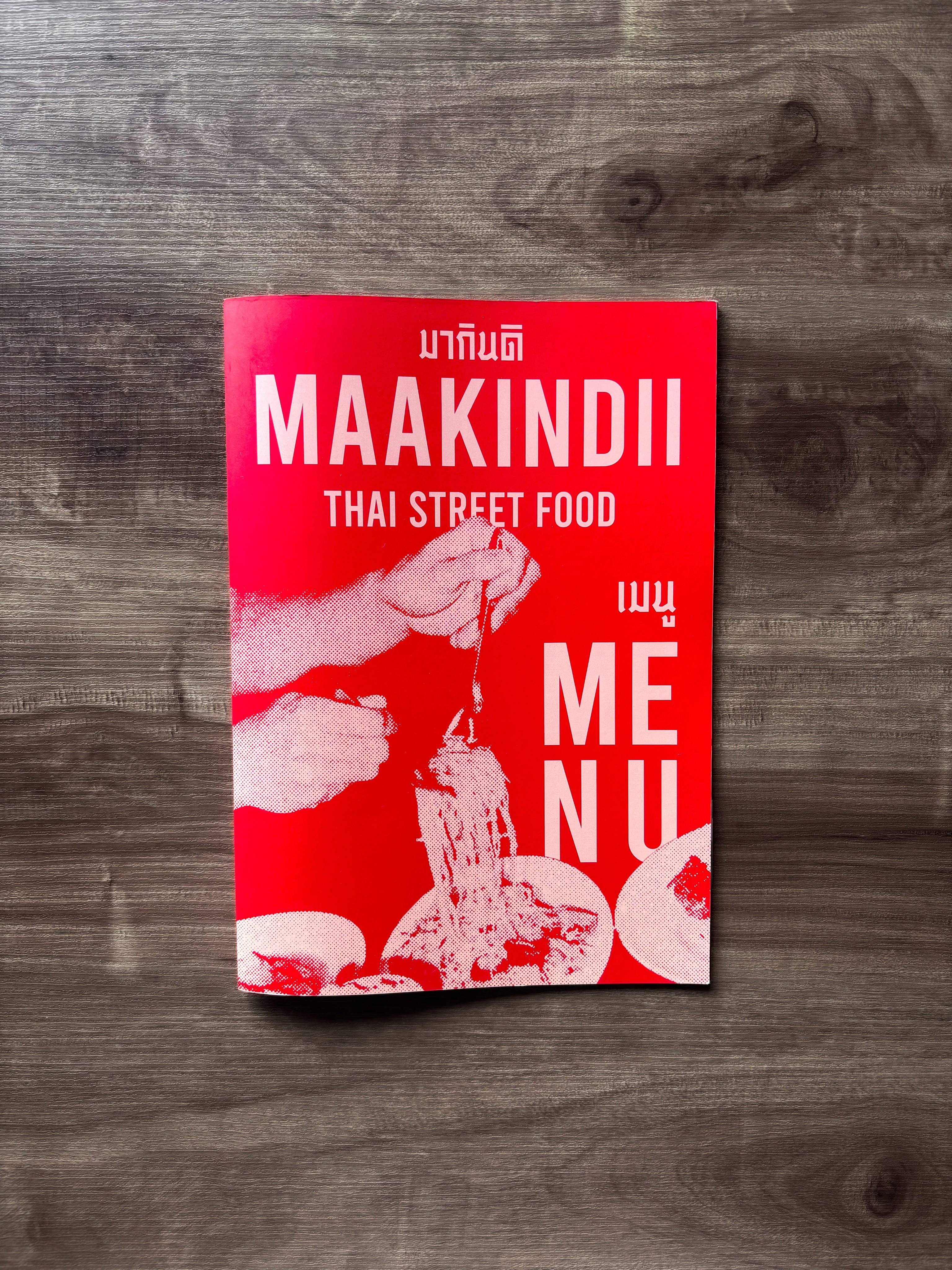
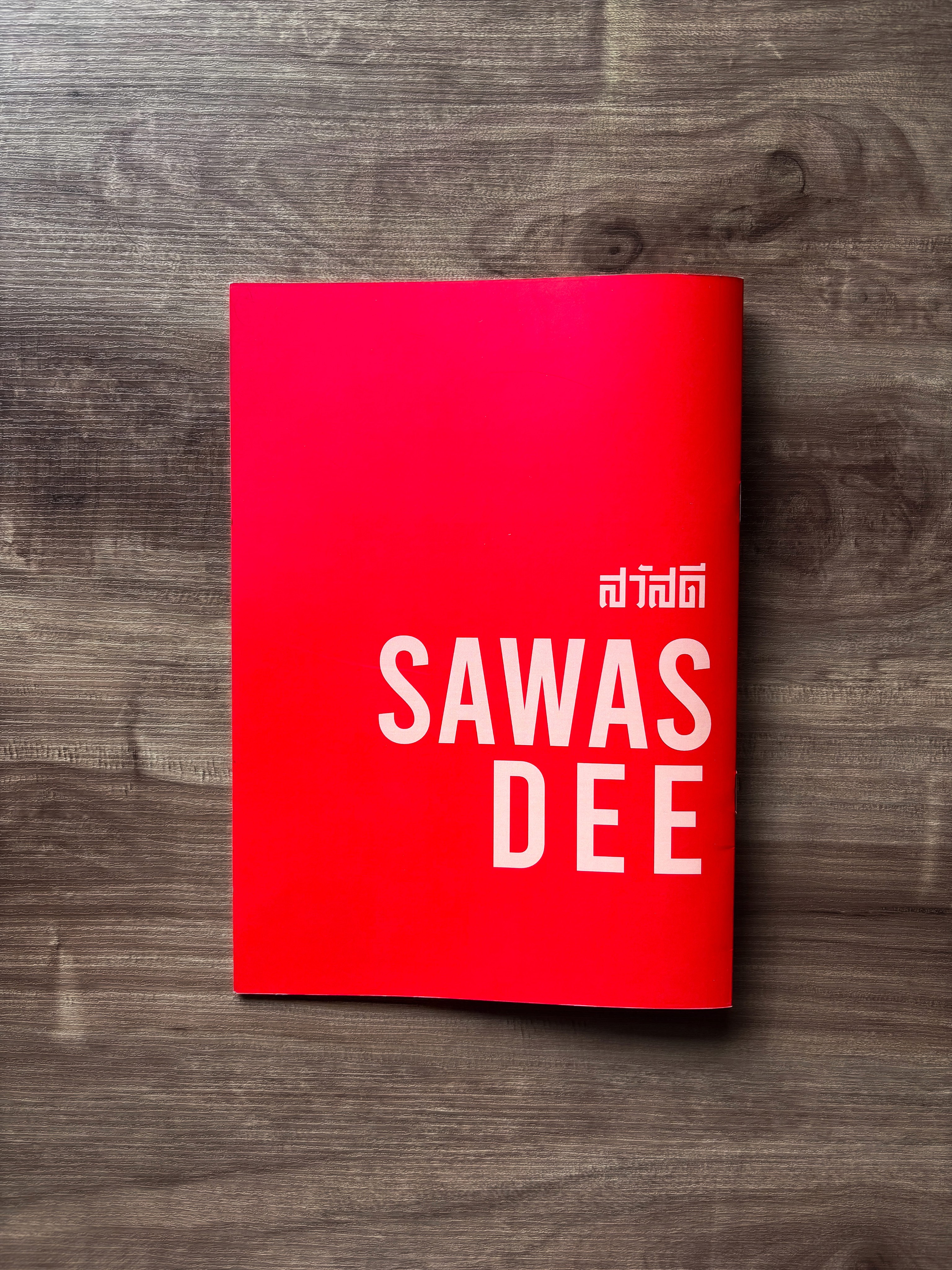
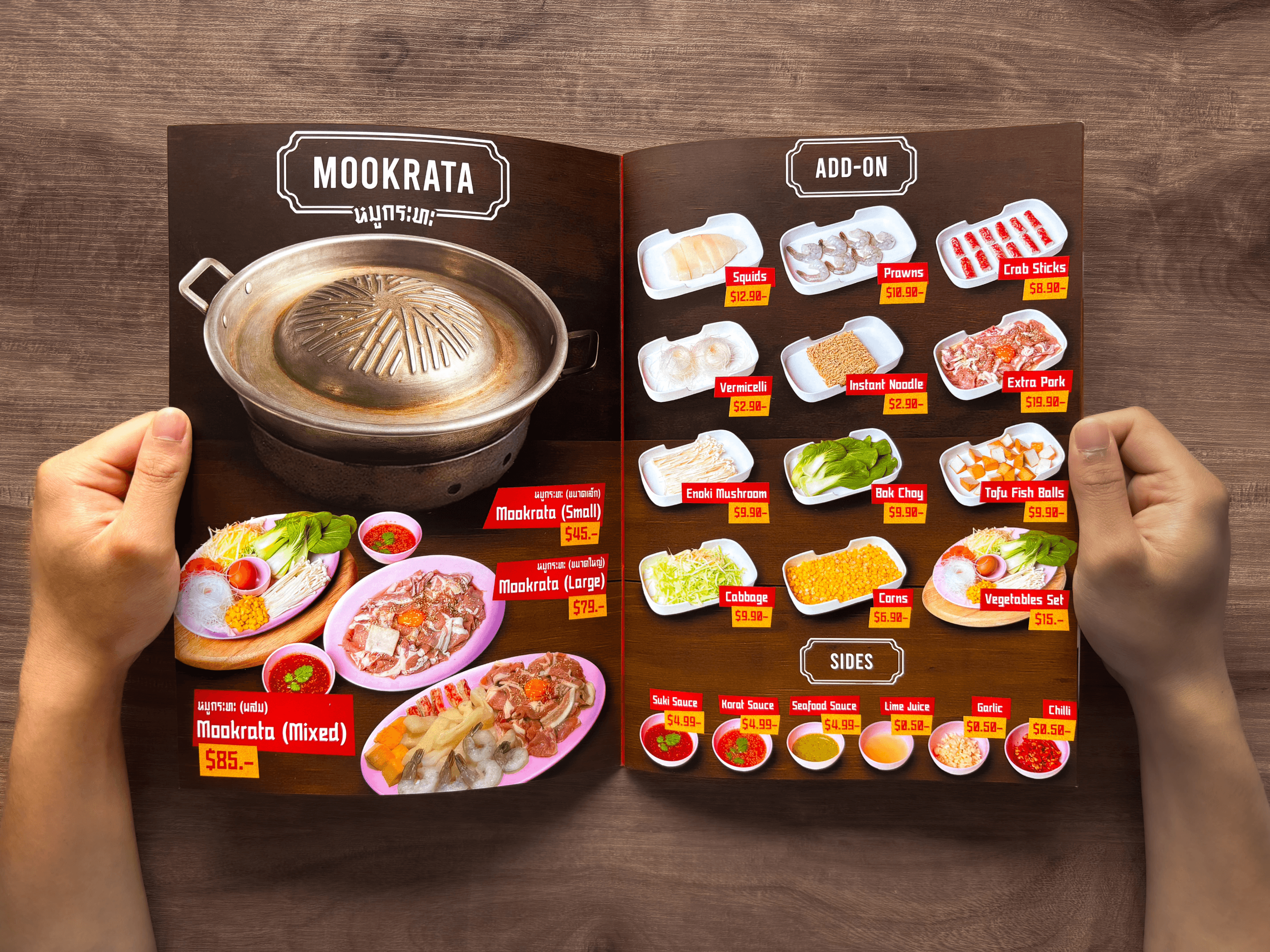
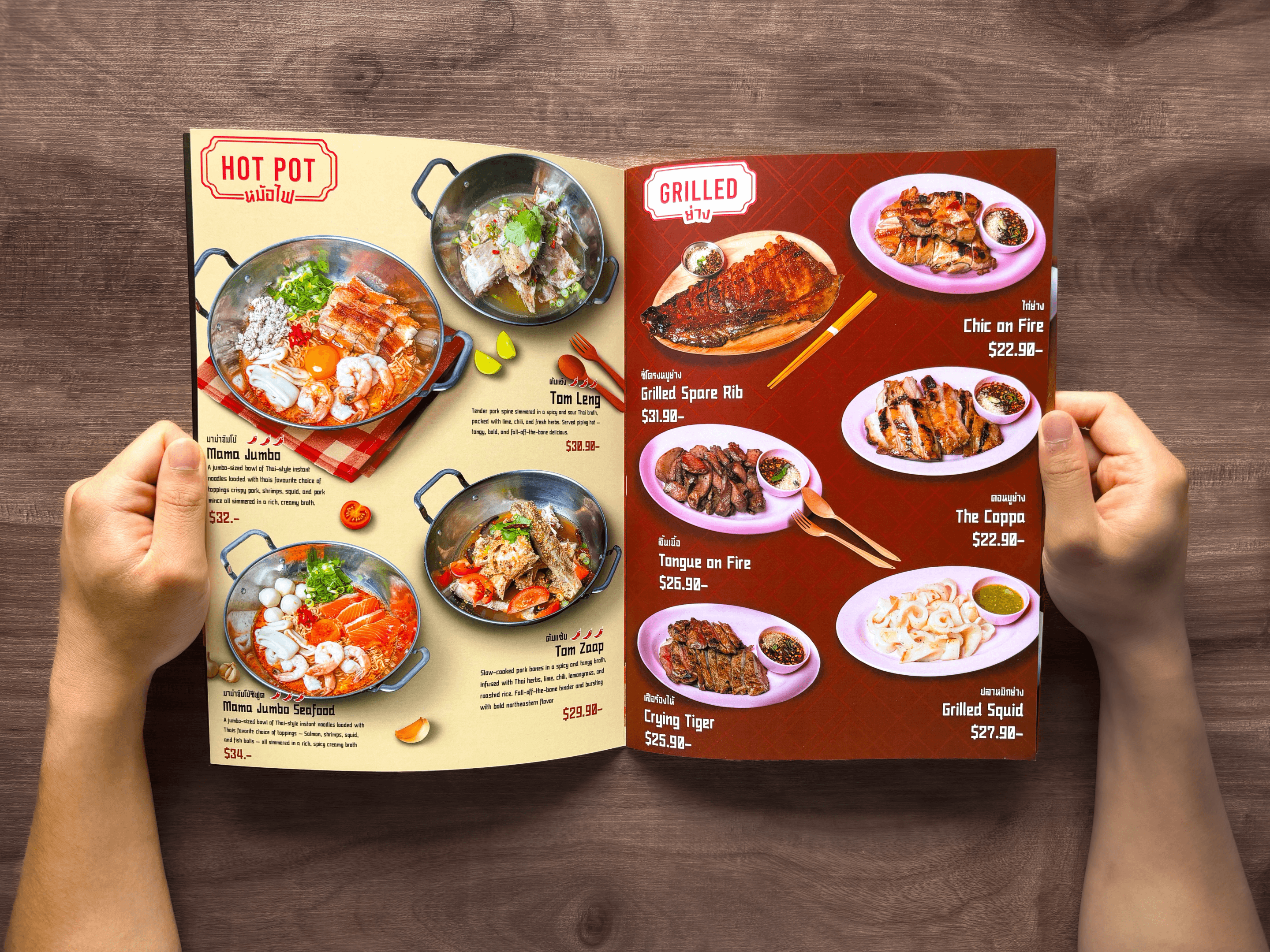
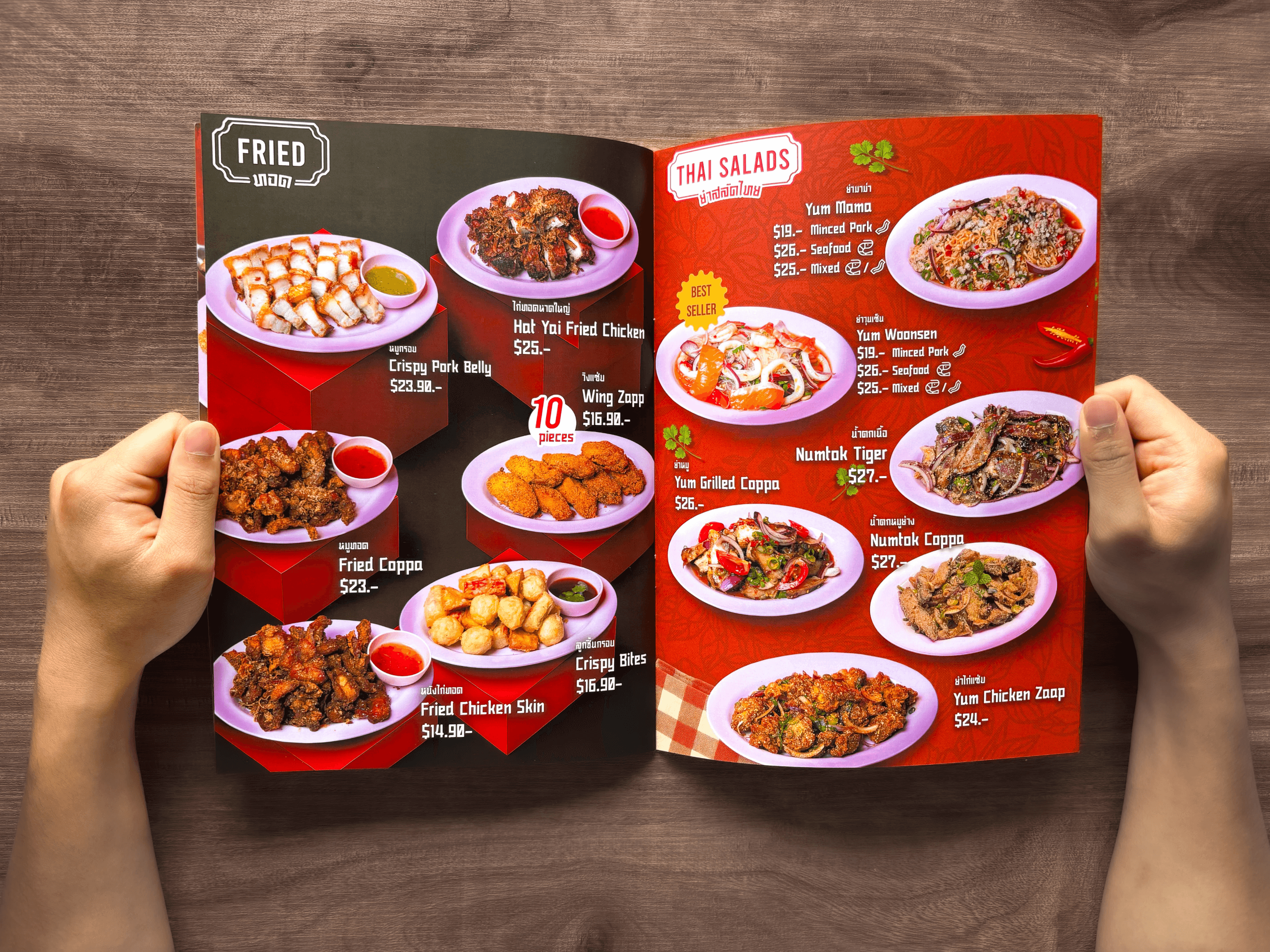
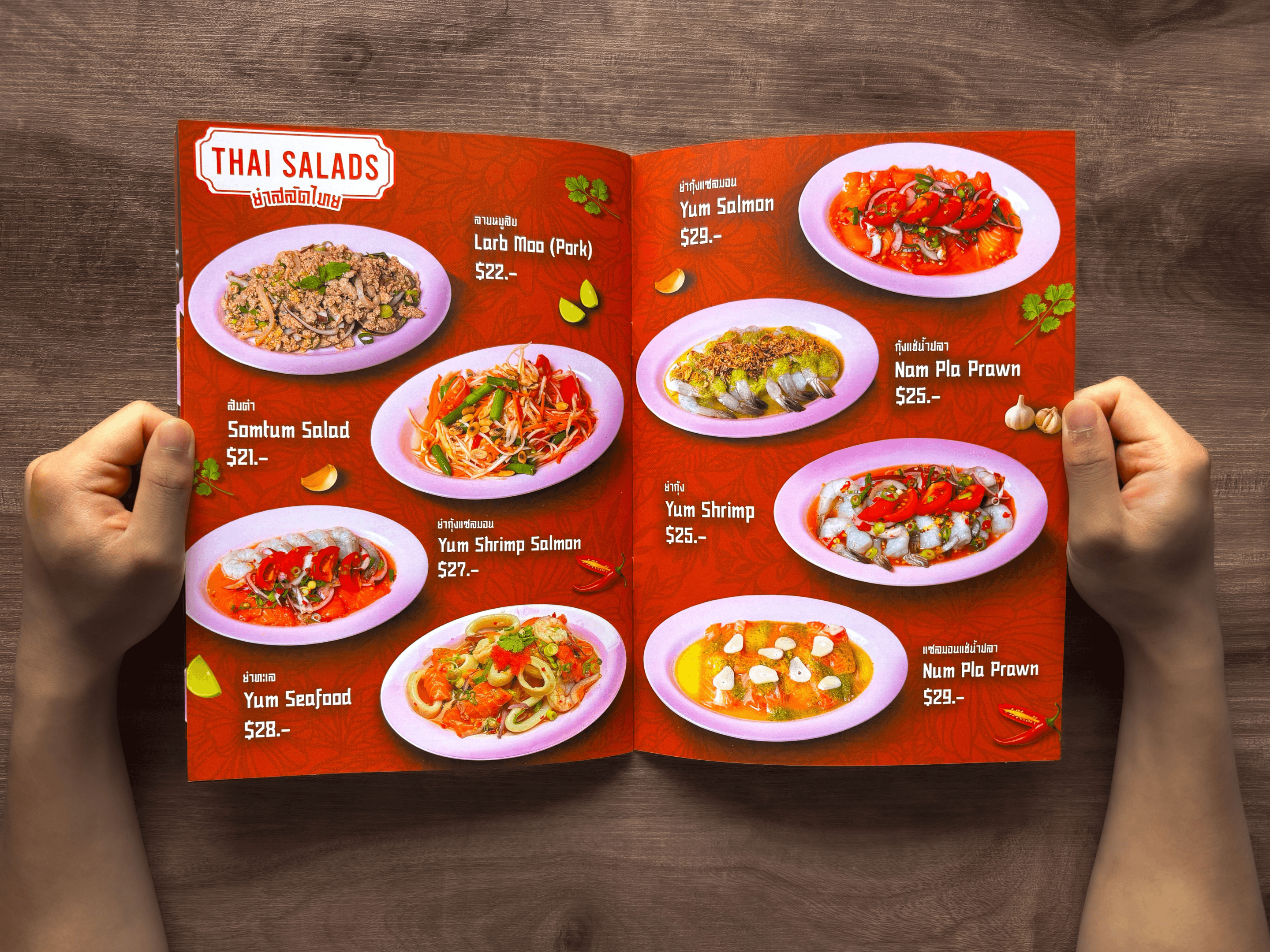
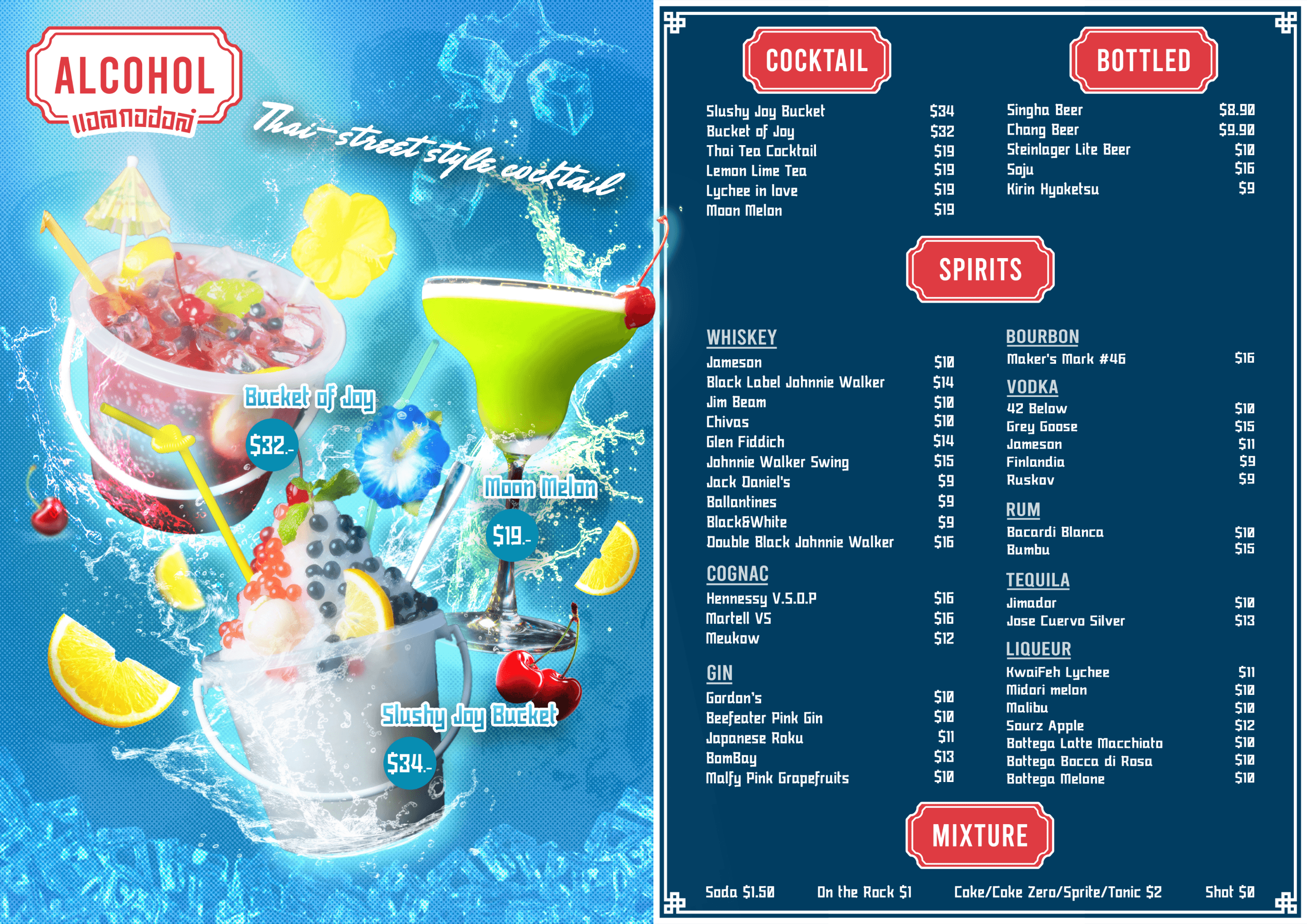
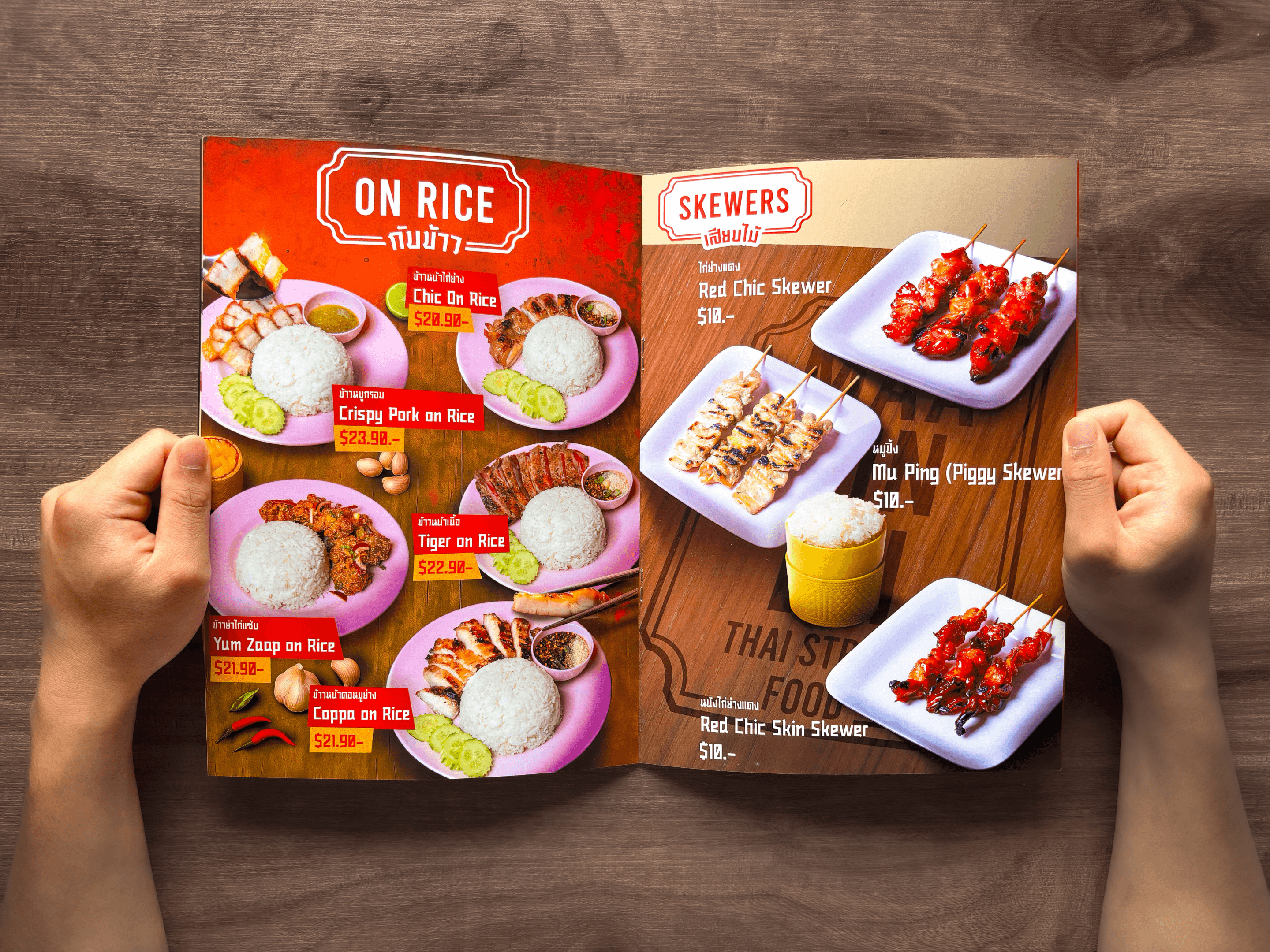
Final Menu Design

Final Menu Design

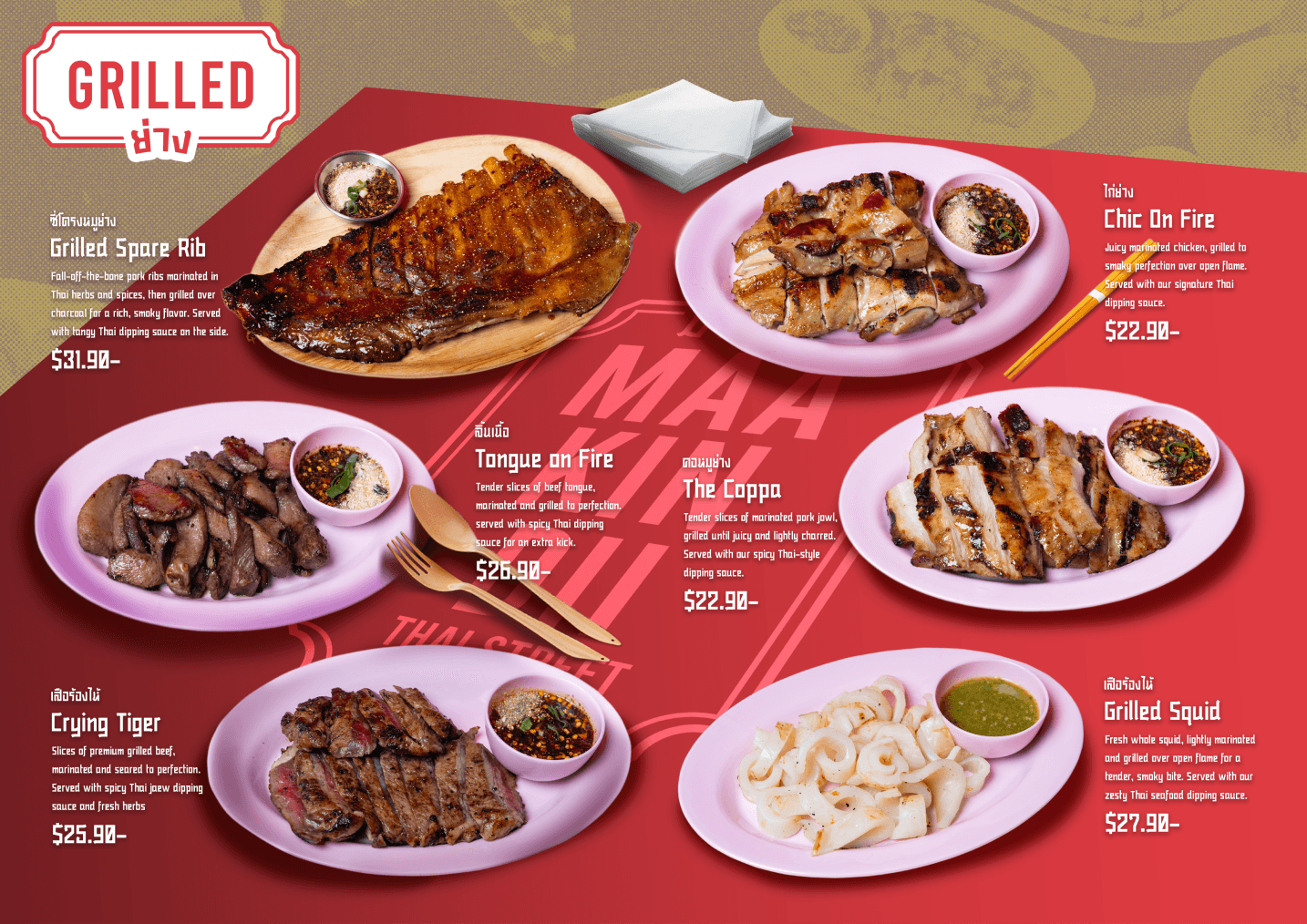
A later iteration introduced AI-assisted background generation, which proved more successful and aligned better with the client’s expectations. (although most of the work are still hand-made using Adobe Photoshop)

A later iteration introduced AI-assisted background generation, which proved more successful and aligned better with the client’s expectations. (although most of the work are still hand-made using Adobe Photoshop)

REFLECTION

REFLECTION

{end}

{end}

Communication is essential, and don’t be too generous + AI and design integrity

Communication is essential, and don’t be too generous + AI and design integrity

Maakindii was my first big freelance client brief, and the first time I had to build a real working system, not just a design file. I set up Slack and Google Drive with a clear folder structure, then ran the project on quick iterations and regular feedback loops. It taught me that good client work isn’t just about the design, it’s about how clearly you can communicate the thinking behind it.


Looking back, I’d set a firmer deadline and a limit on revision rounds. This project went through more iterations than it needed, mostly because I said yes too easily. Next time, I want to hold a clearer line between being flexible and protecting the work from endless small changes.


The most interesting part was integrating AI generated images into the workflow. I didn’t expect it to lift the quality of the output as much as it did, and the client noticed the difference too. It made me rethink where AI actually earns its place in a design process, not as a shortcut, but as another tool that can sharpen the final result. It also raised a question I’m still sitting with: where’s the line between using AI to support my design decisions, and letting it start making them for me. That balance between efficiency and design integrity is something I want to keep exploring.

Maakindii was my first big freelance client brief, and the first time I had to build a real working system, not just a design file. I set up Slack and Google Drive with a clear folder structure, then ran the project on quick iterations and regular feedback loops. It taught me that good client work isn’t just about the design, it’s about how clearly you can communicate the thinking behind it.


Looking back, I’d set a firmer deadline and a limit on revision rounds. This project went through more iterations than it needed, mostly because I said yes too easily. Next time, I want to hold a clearer line between being flexible and protecting the work from endless small changes.


The most interesting part was integrating AI generated images into the workflow. I didn’t expect it to lift the quality of the output as much as it did, and the client noticed the difference too. It made me rethink where AI actually earns its place in a design process, not as a shortcut, but as another tool that can sharpen the final result. It also raised a question I’m still sitting with: where’s the line between using AI to support my design decisions, and letting it start making them for me. That balance between efficiency and design integrity is something I want to keep exploring.

GET IN TOUCH

DESIGNED BY TAM METHACHAI

GET IN TOUCH

DESIGNED BY TAM METHACHAI

GET IN TOUCH

DESIGNED BY TAM METHACHAI